






An Uncompromising Vision
The journey began with writer-director Brad Bird, who first conceived of the idea back in 1993. He didn't just want to make an animated superhero romp; he envisioned a story about a family, tackling midlife crisis, suburban malaise, and finding purpose.
When Bird pitched the idea to Pixar in 2000, it was a departure from their previous films. This wasn't a story about toys, bugs, or monsters; it was about complex human beings. Bird’s vision was for a film that felt real, even if it looked stylized. He wanted the emotional weight of a live-action drama with the dynamic energy of classic cartoons, a combination that would push Pixar's creative and technical teams into uncharted territory.
The Human Character Problem
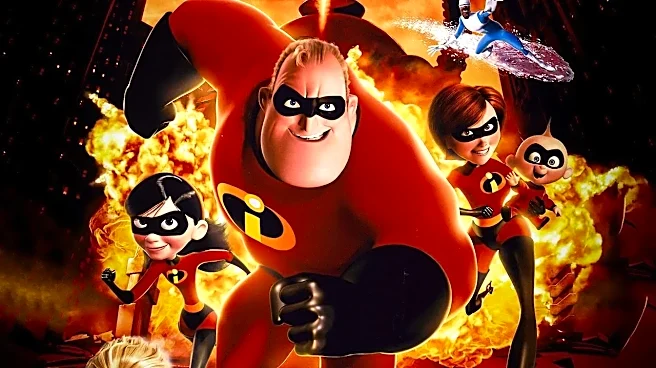
Prior to The Incredibles, Pixar had consciously avoided animating realistic humans on a large scale. Characters like Buzz Lightyear were stylized toys, and Boo from Monsters, Inc. was a single, simplified child. The Incredibles required an entire cast of believable people. This presented enormous technical challenges. The crew had to essentially invent new systems for simulating how skin moves over muscle and bone to avoid characters looking like puppets. This 'rigging' process was incredibly complex, especially for a character like Helen Parr (Elastigirl), who needed to stretch in impossible ways while still feeling grounded in a physical reality. The team developed a sophisticated layered rig to allow animators to switch between her normal human movements and her elastic superpowers.
Hair, Clothes, and Explosions
Two of the biggest animation nightmares are hair and clothing, and The Incredibles had both in spades. Animating Violet’s long, flowing hair—which was central to her shy character—was considered nearly impossible until terrifyingly late in production. Every strand had to be simulated to interact with every other strand, a computational nightmare. Similarly, the film's retro-futuristic costumes couldn't just be painted on; they needed to stretch, tear, and interact with the characters' super-powered movements. Beyond the characters themselves, the film featured a massive number of sets and destructive action sequences with fire, water, and explosions—all elements that were incredibly difficult for computer animation at the time. One effects artist noted that even a simple dinner scene was a challenge, because the food had to look appetizing, not like plastic.
A 'Black Sheep' Mentality
Faced with a project that the technical team initially estimated would take ten years and half a billion dollars, Brad Bird made an unusual request. He asked for the studio's "black sheep”—the frustrated artists and animators who had different, unconventional ideas about how to solve problems. This strategy fostered an environment of intense innovation. Bird believed that these outsiders were the key to achieving his ambitious vision within a realistic timeframe and budget. This hand-picked team developed new tools and workflows, adapting live-action production concepts to manage the film's immense scale. The result was a four-year production cycle, from 2000 to its release in 2004, which, while lengthy, was a triumph considering the unprecedented complexity of the film.