




Rick Owens
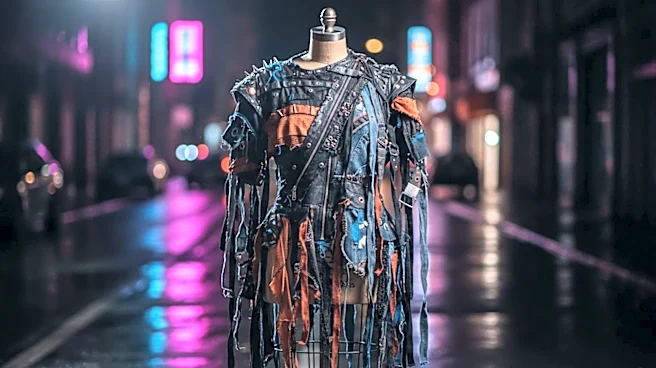
If Undercover is punk rock chaos, Rick Owens is gothic architecture in motion. Known as the Lord of Darkness, the American designer shares Takahashi's rebellious spirit but channels it into a more severe, sculptural, and monochromatic vision. Where Undercover uses
graphics and deconstruction, Owens uses dramatic draping, luxurious yet raw materials like leather and cashmere, and architectural silhouettes to challenge the human form. His designs feel both ancient and futuristic, offering a different, more brutalist flavor of avant-garde. For the Undercover fan who appreciates a garment's power to transform, Owens provides a uniform for a world of glamorous severity and intellectual rigor.
Yohji Yamamoto
A fellow master of Japanese design, Yohji Yamamoto is one of the original pioneers of the anti-fashion movement. Like Takahashi, Yamamoto rejects conventional beauty, preferring to find it in imperfection, asymmetry, and intellect. His work is less about punk's overt aggression and more about a quiet, poetic rebellion. He famously uses black as a primary color, not for its somberness, but for its attitude and mystery. An Undercover admirer will appreciate Yamamoto's masterful tailoring, his deconstructed and oversized silhouettes that protect rather than reveal the body, and the deep, philosophical approach that treats clothing as an extension of identity.
Comme des Garçons
It’s impossible to discuss Undercover without mentioning Rei Kawakubo’s Comme des Garçons. Kawakubo was an early champion of Takahashi's work and is considered the godmother of Japanese avant-garde fashion. CDG is less a brand and more a creative universe, constantly challenging what clothing can be. The core connection is a shared conceptual and experimental approach. Both brands are known for deconstructed silhouettes, a disregard for conventional fashion norms, and creating pieces that are closer to wearable art. While Undercover often filters its rebellion through punk and pop culture, CDG’s rebellion is often more abstract and architectural, but the spirit of innovation and non-conformity is identical.
Raf Simons
Belgian designer Raf Simons shares Takahashi's deep obsession with youth subculture and music. While Undercover is rooted in punk, Simons' work is a deep dive into post-punk, new wave, and the rebellious energy of European youth. He was one of the first designers to merge the attitude of the street with the world of high fashion, creating a blueprint for modern menswear. His collections are famous for their use of graphic patches, band references (like Joy Division and New Order), and an overarching sense of teenage angst and alienation. For anyone drawn to Undercover’s intricate web of cultural references, Simons offers a parallel universe of art, music, and defiant individuality translated into cloth.
Marine Serre
For a more contemporary counterpart, look to French designer Marine Serre. While her aesthetic is distinctly futuristic, she shares Undercover’s talent for creating a powerful visual identity through graphics—her crescent moon print has become an instant cult signifier. Serre’s work blends sportswear and couture with an apocalyptic, utilitarian edge that feels spiritually connected to Takahashi's vision. Her focus on upcycling and transforming existing materials into high-fashion garments echoes the resourcefulness of punk. If Undercover is about beautiful chaos, Marine Serre offers a vision of “FutureWear” for a world that has survived it, blending radical design with environmental consciousness.