








The Familiar Look of Austerity
The fashion we associate with the Second World War was born from necessity. In the United States, the War Production Board issued Regulation L-85 in 1942, a set of rules designed to cut domestic fabric consumption by 15 percent to support the war effort.
This meant strict limitations on clothing design. Hems and belts couldn't be wider than two inches, pleats and ruffles were banned, and a garment could have no more than one pocket. Men's suits lost their double-breasted jackets and trouser cuffs. Wool was needed for uniforms, and silk and newly invented nylon were redirected to make parachutes and ropes. The result was a streamlined, sober, and functional style. Women painted seams on their bare legs to simulate the stockings they could no longer get, a daily reminder of the sacrifices being made on the home front. This “utility” look became a symbol of shared purpose and patriotism.
A Different Vision in Occupied Paris
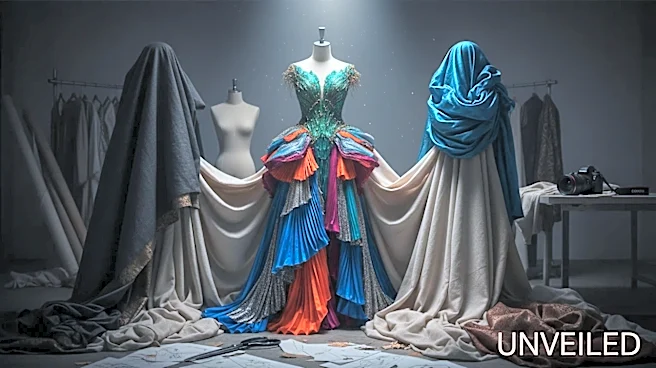
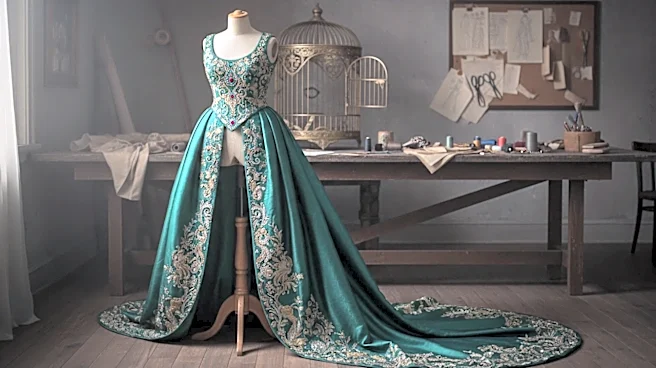
But across the Atlantic, in occupied Paris, a quiet rebellion was taking shape. Before the war, Paris was the undisputed center of global fashion. The Nazi regime, aiming to shift the industry's capital to Berlin and Vienna, imposed severe restrictions. Yet, Parisian couturiers, led by Lucien Lelong, president of the Chambre Syndicale de la Couture, fought to keep their ateliers alive. While American and British fashion adapted to rationing with practicality, Parisian designers responded with defiance. They championed extravagant, almost fantastical designs that used copious amounts of fabric. They couldn't produce many, but the ideas were a form of cultural resistance. Their creations featured wide, dramatic sleeves, cinched waists, and elaborate, often towering hats—a stark contrast to the minimalist utility wear of the Allies. It was a statement that Parisian creativity and luxury could not be extinguished, even under occupation.
The Theater of Fashion
This defiant spirit culminated in a remarkable project just after the liberation of Paris. In 1945, with resources still incredibly scarce, producing a full-scale couture show was impossible. So Robert Ricci, son of designer Nina Ricci, proposed an alternative: the Théâtre de la Mode (Theatre of Fashion). Over 40 of Paris's top design houses—including Balenciaga, Schiaparelli, and a then-unknown Christian Dior working for Lelong—created miniature, one-third-scale couture outfits. These were displayed on 27-inch wire mannequins and set in elaborate, artistic dioramas created by artists like Jean Cocteau. The miniature gowns were exquisitely detailed, with working zippers and tiny accessories. Opening at the Louvre, the exhibition was a sensation, proving that even with nothing, Parisian fashion could still create magic. It showcased a vision of fashion that was romantic and opulent—the polar opposite of the wartime uniform.
Why Necessity Ultimately Won
So why didn't this lavish Parisian look define the 1940s? For most of the world, it was simply impossible. The Allied war effort demanded total mobilization of resources, and the L-85 regulations in the U.S. and the Utility Clothing scheme in Britain were essential. The Parisian vision was a beautiful dream, but one that couldn't be realized while fabric was needed for soldiers' uniforms. It was a fashion of resistance, not reality. The American approach, meanwhile, blended regulation with an emerging “American Look” championed by designers like Claire McCardell, who focused on practical, versatile sportswear. This was the aesthetic that dressed the majority of women for the duration of the war. The Parisian dream was confined by the occupation, an inspiring but isolated chapter in fashion history.
The Dream Reborn
The story doesn't end there. The defiant, feminine ideal kept alive in Paris during the war exploded onto the scene in February 1947. Christian Dior, who had contributed to the Théâtre de la Mode, unveiled his first solo collection. Featuring soft, rounded shoulders, a tightly cinched waist, and a voluminous, mid-calf skirt that used yards of fabric, it was dubbed the “New Look.” It was the Parisian wartime dream made real. It was a radical, controversial departure from the boxy, fabric-saving silhouettes people had grown used to. Some protested the wastefulness while rationing was still in effect elsewhere, but many women embraced it as a return to femininity and optimism after years of hardship. The New Look became the dominant silhouette of the post-war era, proving that the vision for a different kind of 1940s fashion hadn't died; it was just waiting for peace.