




A Tale of Two Emmys
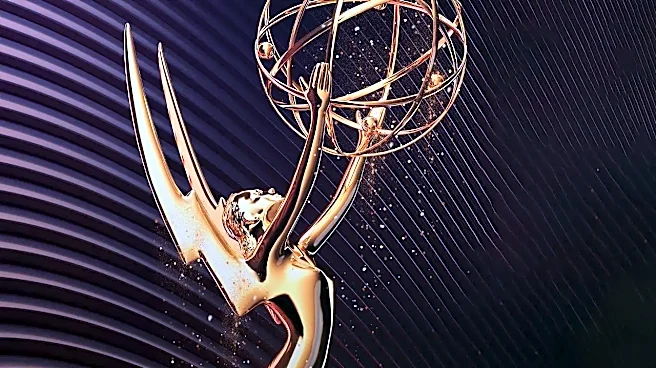
To understand the Creative Arts Emmys, you have to go back to 1970. The television industry was expanding, and the Academy of Television Arts & Sciences faced a logistical dilemma: there were simply too many awards to fit into a single, slick telecast.
Categories honoring cinematography, editing, sound mixing, and costume design were essential to recognizing excellence, but they were getting lost in the shuffle. The solution was a strategic split. A separate ceremony, the Creative Arts Emmys, was created to give these technical and artistic disciplines their own dedicated spotlight. It wasn’t a demotion; it was a necessary move to ensure the artists and technicians who build television shows from the ground up received their due. The main primetime broadcast could then focus on the actors, writers, directors, and series that audiences knew best, while the craft awards could celebrate the work that made those very shows possible.
Defining the 'Below-the-Line' Army
The artisans honored at the Creative Arts Emmys are often referred to as “below-the-line” talent. It’s an industry term that originates from old film budget sheets, where a literal line separated the fixed, high-cost salaries of producers, directors, and major stars (above-the-line) from the variable costs of the rest of the crew (below-the-line). The term is a budgetary classification, not a judgment of value. In reality, these below-the-line professionals are the lifeblood of any production. They are the production designers who build fantastical worlds, the cinematographers who paint with light, the editors who shape the rhythm and pace of a story, and the sound designers who create an immersive audio landscape. They are the massive, coordinated army of specialists whose work dictates the entire look, feel, and texture of a series. Without their collective expertise, even the most brilliant script or captivating performance would remain an abstract idea.
History Repeats in the Streaming Era
The very pressures that led to the creation of the Creative Arts Emmys in 1970 came roaring back in the 21st century, amplified by the streaming wars. The era of “Peak TV” created an unprecedented explosion of content, with hundreds of high-budget shows vying for attention. Once again, the Television Academy found itself with an overwhelming number of categories. By 2016, the volume of awards was so great that the Creative Arts ceremony itself had to be split into two separate nights. The reason was the same as before: to properly recognize the sheer volume of excellent work being done. The modern television landscape, dominated by visually complex shows like this year’s nominees “The Pitt” and “Pluribus,” relies more heavily on craft than ever before. World-building is no longer a niche concept; it’s a prerequisite for many of the industry's biggest hits, demanding unparalleled skill in visual effects, production design, and costuming.
Why Craft Is the New King
In today’s saturated market, exceptional craft is often what separates a good show from a great one. While star power still draws viewers in, it’s the immersive quality of a series that keeps them watching. Genre television, in particular, has become a showcase for this innovation. The fantastical realms of sci-fi and fantasy, the detailed authenticity of period dramas, and the stylized aesthetics of dark thrillers are all built on a foundation of meticulous craftsmanship. These are the shows that consistently dominate the Creative Arts categories, as they are playgrounds for technical and artistic boundary-pushing. Honoring this work is more than just an industry pat on the back. It validates the essential, often grueling labor of thousands of artists. In an era of tightening budgets and production uncertainty, celebrating craft sends a crucial message: the magic of television isn't just in the script, it's in the execution.