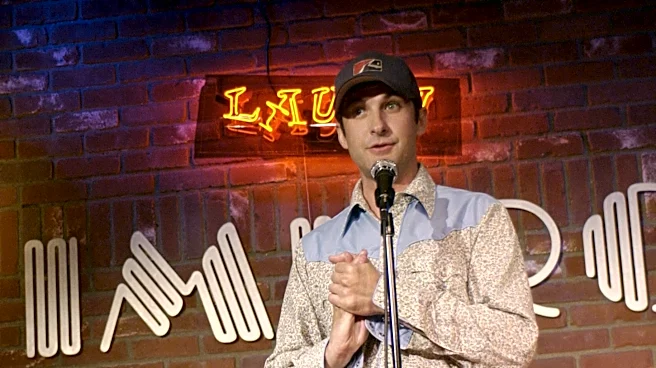




An Idea Born from a Car Ride
The legend goes something like this: on his way to a club, the idea that would become his most searing and debated routine started to form. It wasn't written in a notebook or polished over weeks. According to his friend and fellow comic Bill Burr, this was O'Neal's
method—or lack thereof. He famously never wrote his material down, preferring to let ideas marinate and develop live on stage. This particular idea, a dissertation on the absurdities of workplace dynamics, would anchor his only hour-long special, 'Elephant in the Room,' and become a pillar of his legacy. The bit in question is his infamous, hilarious, and deeply provocative take on sexual harassment.
'Harassment Day': The Bit That Defined a Philosophy
In the bit, O'Neal doesn't just tell jokes; he builds a case. He argues, with the conviction of a world-weary philosopher, that the rules governing workplace interaction are fundamentally absurd. His proposed solution? A single 'Harassment Day,' a holiday where one could finally ask the questions they've been wondering all year and get a straight answer. He uses the analogy of a grizzly bear forced to work alongside salmon dipped in honey, yet forbidden from even acknowledging the temptation. The routine is pure O'Neal: taking a controversial premise, exploring it with unflinching honesty, and finding profound, uncomfortable humor in the gray areas of human behavior. It was confrontational, politically incorrect, and utterly brilliant.
Comedy Without a Safety Net
The way the 'Harassment Day' bit was conceived reveals everything about O'Neal's comedic ethos. He saw comedy not as a performance of prepared material, but as a live, evolving conversation between himself and the audience. His peers, including Burr and Colin Quinn, noted that O'Neal was constantly trying to achieve a state of pure freedom on stage, where he could simply talk through his ideas and discover the comedy in real-time. He often compared his structured act to a GPS; it gave him a destination, but he was free to take detours and explore, confident he could always find his way back. This unscripted approach made his performances electric. You weren't just watching a comedian; you were watching a man think, and it was mesmerizing.
The Enduring Legacy of the 'Elephant'
Released in 2011, just nine months before his untimely death at the age of 41, 'Elephant in the Room' became Patrice O'Neal's definitive statement. He was already a 'comedian's comedian,' widely respected in the industry for his raw honesty and intellectual rigor. After his passing, his stature only grew. Comics like Bill Burr credit him as a formative influence, someone who taught them how to find comedy in pure, unfiltered thought rather than just setups and punchlines. O'Neal's work thrives posthumously because it feels more vital than ever—a fearless quest for truth in a world that often prefers comfortable lies. He wasn't just talking about office politics; he was dissecting the messy, unspoken contracts that govern our lives.