


From Victory Lap to Sales Pitch
There was a time when the greatest-hits medley was a simple, triumphant affair. Think Michael Jackson at the 1995 MTV Video Music Awards—a celebration of an artist at the peak of their cultural dominance. It was a victory lap, pure and simple. The performance
was the main event, not a vehicle for something else. But in today’s music landscape, particularly at fan-voted shows like the American Music Awards (AMAs), the medley has been quietly retooled. It has become the industry’s most potent and efficient commercial, designed not just to entertain the live audience, but to activate millions of viewers at home to open their streaming apps. The spectacle now serves the strategy.
The Streaming Economy Rewrites the Rules
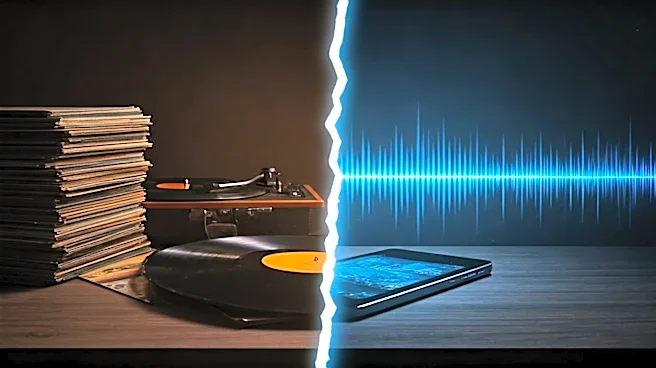
The shift happened in lockstep with the rise of the streaming economy. When fans bought physical albums, a TV performance might drive them to a record store. Today, the path to purchase is instantaneous and fragmented. A medley isn't designed to sell one new album; it’s designed to reactivate an artist’s entire back catalog. Each 30-second snippet of a classic hit acts as a sonic breadcrumb. Viewers hear a forgotten favorite, instinctively pull out their phones, and search for it on Spotify or Apple Music. From there, they might fall down a rabbit hole, adding other old hits to a playlist or rediscovering an entire album. Industry data consistently shows that major TV performances cause significant, immediate spikes in an artist's streaming numbers, particularly for the songs performed. The medley is a fire hose of audio cues, spraying listeners with reasons to click, stream, and ultimately generate revenue, one fraction of a cent at a time.
The 'Icon' Award as Marketing Engine
Nowhere is this strategy more apparent than in the proliferation of lifetime achievement-style honors. Awards like the AMAs’ “Icon Award” or “Artist of the Decade” are custom-built for the catalog commercial. When Taylor Swift performed a medley of her past hits at the 2019 AMAs after a public battle over the rights to her master recordings, it was more than a performance; it was a re-assertion of ownership and a masterclass in monetizing a narrative. Similarly, when P!nk or Jennifer Lopez receive career-spanning honors, the accompanying medley functions as a powerful re-introduction to their discographies. It reminds viewers of their decades-long impact and, more importantly, the sheer volume of hits they have available to stream. These awards provide the perfect narrative justification for what is, in effect, a primetime advertising slot for an artist’s entire body of work.
A Nostalgia Gold Rush for Legacy Acts
This isn't just a game for current superstars. The medley is also a crucial tool for legacy acts. Take the 2021 AMAs’ “Battle of Boston,” which pitted New Kids on the Block against New Edition. The performance was a blast of pure ‘80s and ‘90s nostalgia, a rapid-fire sequence of hits that sent a clear message to Gen X and older millennial viewers: we’re still here, and we’re going on tour. For these groups, a high-profile medley isn't about topping the weekly charts. It’s about selling high-priced concert tickets, moving merchandise, and reminding a demographic with disposable income that their favorite bands are a viable entertainment option. The medley serves as a proof-of-concept for a tour, demonstrating the depth of the setlist and the energy the performers can still bring. It’s a direct appeal to a lucrative market, wrapped in the fun of a friendly musical showdown.