






So, What Exactly Is Virtual Production?
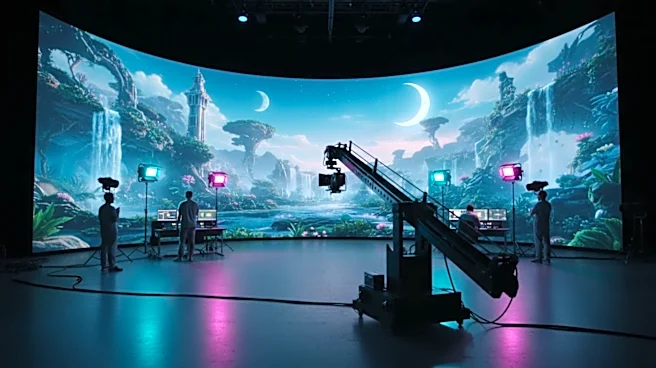
At its heart, virtual production swaps the traditional green screen for massive, curved LED video walls. These high-resolution screens, often housed in a soundstage called “The Volume,” display photorealistic, computer-generated environments. Instead
of actors guessing what a sci-fi city or fantasy landscape will look like, they see it and perform within it. The real magic is that these digital backgrounds are rendered in real-time using powerful video game engines, like Epic Games' Unreal Engine. As the camera moves, the perspective on the screen shifts with it, creating a seamless illusion of depth and reality that gets captured directly by the camera.
Goodbye, Green Screen Guesswork
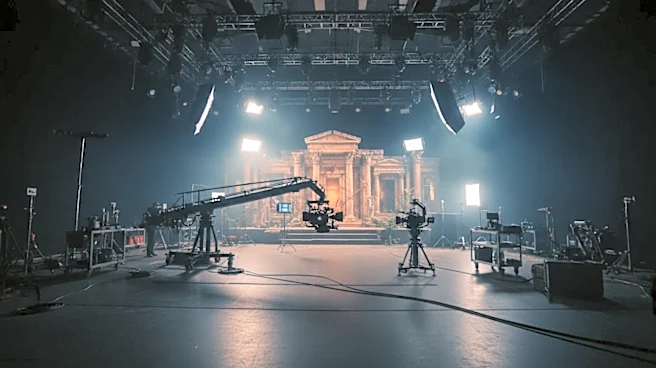
For decades, actors and cinematographers worked in a world of abstraction. They’d film against a vast green void, with visual effects added months later in post-production. This often led to lighting challenges and a sense of disconnect for performers. Virtual production flips the script. The LED walls themselves emit light, bathing actors and physical set pieces in the authentic glow of the virtual world behind them. If the background is a sunset over a desert, the actors are lit by the warm, orange hues of that digital sun. This provides cinematographers with realistic, interactive lighting and reflections that were previously impossible to achieve in-camera, resulting in a more natural and believable final image.
A New Era of Collaboration
Perhaps the biggest change isn’t the tech itself, but how it reshapes the creative process. Traditionally, departments worked in sequence: the art department designed sets, the camera crew filmed, and the VFX team cleaned it all up later. Virtual production forces these teams to collaborate from day one. The production designer, cinematographer, and visual effects supervisor must build the digital world together in pre-production. Decisions that were once made months apart are now made in real-time on set. This “front-loading” of creative choices means more control and fewer surprises in post-production, fostering a more integrated and iterative style of filmmaking.
Crafting Award-Winning Worlds
The “Emmy-Era” part of the headline isn’t just a buzzword. Shows that have pioneered or heavily utilized virtual production are consistently recognized for their technical and artistic achievements. Series like The Mandalorian and Percy Jackson and the Olympians have taken home Emmys for their groundbreaking visual effects, much of which is owed to the power of virtual production. This technology allows for epic, cinematic-quality visuals on a television schedule and budget. It has enabled series to create immersive worlds that would have been logistically nightmarish or financially prohibitive to shoot on location, raising the bar for what audiences expect from high-end television.
The Future Is Already Here
What started as a blockbuster tool for shows with Disney-sized budgets is rapidly becoming more accessible. The cost of LED panels is decreasing, and the number of virtual production stages across North America has more than tripled since 2021. Major players like Tyler Perry Studios are now building their own state-of-the-art LED volumes, signaling a wider industry adoption. While it won't replace every on-location shoot, virtual production is no longer a niche experiment. It has become a crucial part of the modern filmmaker's toolkit, especially for common scenarios like car driving scenes, which are now faster and safer to shoot in a volume. It represents a fundamental shift from fixing things in post to building perfect worlds from the start.