




Rock Legends Claim Their Space
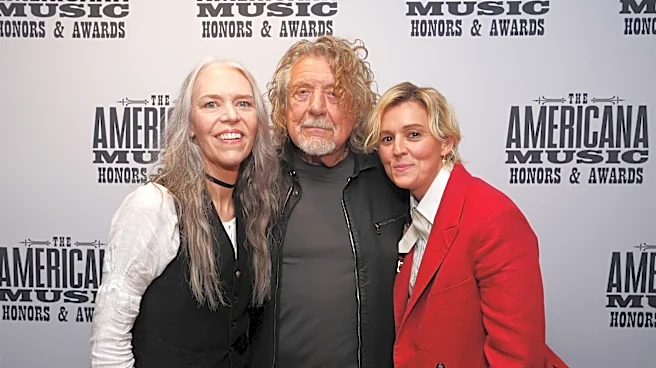
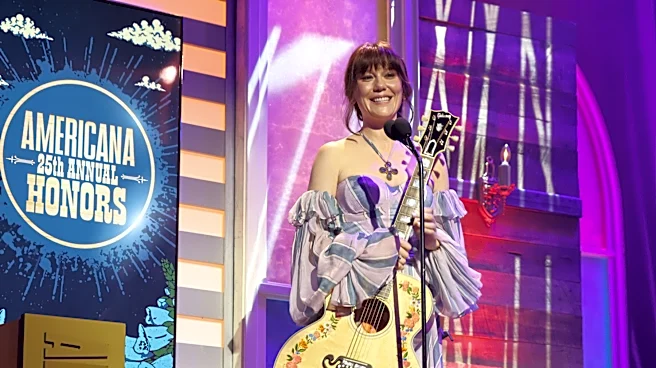
This year’s Americana Honors & Awards made the connection between rock and roots music impossible to ignore. Two of the night's Lifetime Achievement honors went to giants of rock: Robert Plant and Tom Petty & The Heartbreakers. Plant, the golden-maned
frontman of Led Zeppelin, returned to the Ryman stage with a fiery performance, reminding everyone that his post-Zeppelin career has been a masterclass in exploring the American songbook. Even more pointedly, the surviving original members of The Heartbreakers reunited for a rare, rollicking performance with Chris Stapleton to celebrate their 50th anniversary. It was a powerful statement. These weren't rock stars slumming it; they were patriarchs being honored by a genre they helped sire. Americana, in its modern form, has become a sanctuary for rock's elder statesmen, a place where lyrical substance and musicianship are prized over chart trends.
The Original Sin: Folk, Country, and a Backbeat
To understand why Robert Plant or a member of The Heartbreakers fits so comfortably at the Americana awards, you have to rewind the tape. The genre, officially defined by the Americana Music Association, is a tapestry of country, folk, blues, soul, and rock. In essence, it shares the exact same primordial soup that created rock and roll in the first place. Before there were clear genre lines, there was just American roots music. The Byrds famously put electric guitars to a Bob Dylan folk song, creating the template for folk rock. Gram Parsons called his fusion of country, rock, and soul "Cosmic American Music," a term that could easily describe half the artists nominated today. Americana isn't a rejection of rock and roll; it's a genre that embraces the shared ancestry and asks what happens when you prioritize the story and the soul over the volume.
The Basement Tapes Blueprint
No conversation about rock's influence on Americana is complete without mentioning Bob Dylan and The Band. When Dylan went electric, he scandalized the folk world, but he also laid the tracks for a new kind of American music. After his motorcycle accident, he retreated to Woodstock with the group of musicians who would become The Band. The informal sessions they recorded, later released as 'The Basement Tapes,' became a foundational text for the entire roots rock and Americana movement. Here was music that was literate, raw, and steeped in a mythic version of America, despite most of The Band being Canadian. Their debut album, 'Music from Big Pink,' was hailed as a new sound: part country, part soul, all rock and roll. They created the blueprint for a band that could be both commercially successful and artistically uncompromising, a core tenet of the modern Americana ethos.
From Indie Rockers to Americana Stalwarts
The throughline from rock to Americana continues into the modern era, often through the side door of indie and alternative rock. Look at this year's nominees and winners. Tyler Childers, who took home Album of the Year for 'Snipe Hunter,' collaborated with producer Rick Rubin, known for his work with everyone from the Beastie Boys to Johnny Cash. Brandi Carlile, a perennial favorite and this year's Song of the Year winner for "Returning to Myself," channels the raw power and theatricality of a rock frontwoman into her folk-based songwriting. Many of today’s most celebrated Americana artists, like Jason Isbell (formerly of the Southern rock outfit Drive-By Truckers), came from louder, more raucous bands. They found that the Americana tent was big enough to accommodate their electric guitars and their introspective, story-driven songs, proving the genre is less about specific instrumentation and more about a commitment to authenticity.