







The Science of Lost Sound
The great outdoors is a terrible concert hall. With no walls or ceiling for sound to bounce off of, many frequencies simply disappear into the open air. A song meticulously mixed for your headphones can sound thin and lifeless when blasted across a massive
field. Bass frequencies, which give music its physical punch, are notorious for dissipating quickly over distance. Meanwhile, high-frequency details can be scattered by wind or absorbed by humidity. Sound engineers at ACL work miracles with massive, sophisticated speaker arrays and delay towers to deliver clear audio, but they can't change physics. This is why songs that rely on dense, subtle layers often fail to connect. The environment demands something bolder.
Anthems Built for a Choir of Thousands
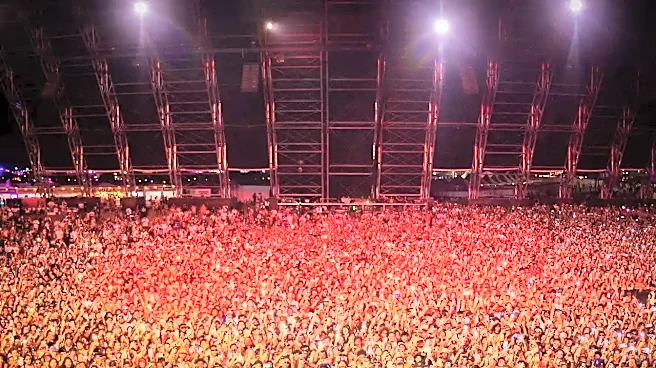
In a festival setting, the crowd is part of the performance. Songs with big, simple, and irresistibly catchy choruses are tailor-made for this environment. Think of the communal energy when thousands of people sing along to a band like The Killers or Florence + The Machine. These anthemic moments create a powerful sense of connection that transcends pure audio quality. The best festival songs often have a call-and-response structure or a wordless vocal hook that's easy for a massive crowd to latch onto. It transforms passive listening into active participation, turning a huge, anonymous space into an intimate, shared experience. The song becomes less of a performance and more of a temporary tribe.
When Rhythm Becomes the Foundation
With delicate sonic details lost to the breeze, a strong, clear rhythm becomes the skeleton that holds a song together outdoors. A powerful, driving beat provides a physical anchor that an entire field of people can feel and move to. This is why genres like rock, hip-hop, and electronic music often translate so well to a festival stage. The kick drum and bassline become the primary messengers, delivering a visceral pulse that you feel in your solar plexus long before the melody fully registers. Artists who understand this will often ask their sound engineers to push the low-end frequencies, ensuring the beat carries all the way to the back of the park.
The Art of the Festival Setlist
Smart artists know that a festival gig is a different beast from a theater show. They don't just play their latest album from start to finish. Crafting a festival setlist is about creating an emotional journey defined by high-impact moments. An effective set starts strong to grab attention, strategically places slower songs for a breather, and saves the biggest hits for a climactic finish. Bands will often create special, more energetic arrangements of their studio songs, extending instrumental sections for bigger payoffs or beefing up the rhythm section. At festivals, where artists have a limited time to win over a diverse crowd, every song has to count.
More Than Just Music
At a huge event like ACL, the visual experience is inseparable from the audio one. From a distance, the nuances of a musician’s performance can be lost. Stage presence, lighting design, and massive video screens all become part of a song's impact. A dynamic light show that pulses with the beat or a charismatic frontman who commands the stage can make a good song feel great. These visual elements help compensate for the lack of sonic intimacy, ensuring the performance feels grand and immersive even from hundreds of feet away. It's a full-body spectacle, designed to create a memory that lasts long after the final chord fades.