







You're Team Black: The Champions of Destiny
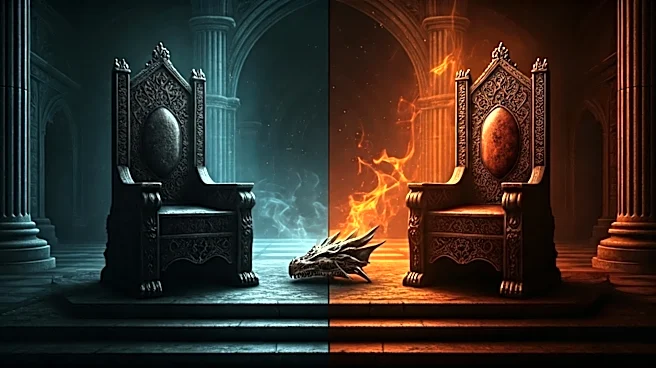
If you bleed black, you’re likely drawn to stories about destiny, rightful inheritance, and protagonists who defy an unjust system. You root for Rhaenyra Targaryen not just because her father named her heir, but because you believe in the power of an individual’s
claim against entrenched tradition. The rules, you feel, were made to be broken, especially when they’re patriarchal ones. Your TV taste probably leans toward charismatic, morally gray anti-heroes. You were on Walter White’s side a little too long, you understand Tony Soprano’s burdens, and you appreciate a messy, passionate lead who makes catastrophic mistakes in the name of what they believe is right. You’ll forgive a lot—even from a wildcard like Daemon Targaryen—as long as the character has a compelling inner fire and a goal you can get behind. You’re not watching for a lesson in perfect morality; you’re watching for the thrilling, often tragic, pursuit of power and purpose against the odds. Your favorite shows might include 'Breaking Bad,' 'The Great,' or 'Vikings,' where flawed-but-fascinating figures try to bend the world to their will.
You're Team Green: The Pragmatists of Power
If you stand with the Greens, you’re a connoisseur of political chess and the cold, hard realities of power. You understand that tradition and stability, however flawed, are powerful forces that prevent chaos. Your support for Aegon’s claim isn’t necessarily about liking him; it’s about recognizing the path of least resistance in a deeply conservative world. You see Alicent Hightower not as a villain, but as a tragic figure trapped by duty, faith, and the counsel of pragmatic men like her father, Otto. Your ideal show is likely a dense, slow-burn political or family drama where the most important moments are quiet conversations in shadowy rooms, not dragon-fueled battles. You appreciate the intricate machinations of 'Succession,' the institutional weight of 'The Crown,' and the complex social navigation in 'Mad Men.' You’re fascinated by characters who operate within a rigid system, using its rules to their advantage. For you, the drama isn’t about a hero breaking the world; it’s about the subtle, soul-crushing compromises people make to survive and thrive within it. You don’t need to love the characters, but you respect their game.
The Common Ground: A Taste for Tragedy
Despite the fierce rivalry, let’s be honest: both sides are drinking from the same cup. Whether you're Team Black or Team Green, you’re here for prestige television that doesn't offer easy answers. You have a high tolerance for unlikeable characters and a deep appreciation for sprawling, novelistic storytelling. You’re not watching a sitcom; you’re signed up for a multi-season Greek tragedy where everybody is doomed in their own special way. The core difference is the flavor of tragedy you prefer. Team Black enjoys the tragedy of the revolutionary, the person who tries to create a new world but is consumed by the effort. They root for the breaker of chains, even when those chains snap back. Team Green, conversely, is drawn to the tragedy of the conformist—the person who plays the game perfectly but loses their soul in the process. They understand the quiet horror of upholding a system that grinds you down. Both factions are, at their heart, fans of complex, heartbreaking stories about the human cost of ambition.
Beyond the Banners: The Show's Real Game
Ultimately, the brilliance of 'House of the Dragon' is that it validates both viewpoints while simultaneously challenging them. The show’s writers intentionally muddy the waters, forcing Rhaenyra into morally compromising positions and giving Alicent moments of profound sympathy and regret. The series is designed to make you question your allegiance at every turn. That moment you find yourself defending a character's horrific action because it serves 'your' side? That’s the show winning, not you. This deliberate ambiguity suggests that the most rewarding way to watch isn't to pick a team and defend it to the death, but to see the conflict from all sides. It encourages us to appreciate the merits of Rhaenyra’s claim while understanding the forces compelling Alicent’s opposition. The real divide isn't between Black and Green; it's between watching for a hero to root for versus watching to understand the anatomy of a disaster.