
The Science of Feeling Stronger
There's a term for what happens when your clothes change how you think and feel: "enclothed cognition." Coined by researchers Hajo Adam and Adam Galinsky, the concept suggests that clothing has a systematic
influence on the wearer's psychological processes. It’s a two-part phenomenon: the symbolic meaning of the clothes and the physical experience of wearing them. A structured blazer isn't just a piece of fabric; it's culturally coded with authority and competence. When you wear it, you’re not just sending a signal to others; you’re sending one to yourself. The physical sensation of a sharp, defined shoulder line can encourage a more upright, powerful posture, which in turn can foster a more assertive mindset.
A Brief History of Broad Shoulders
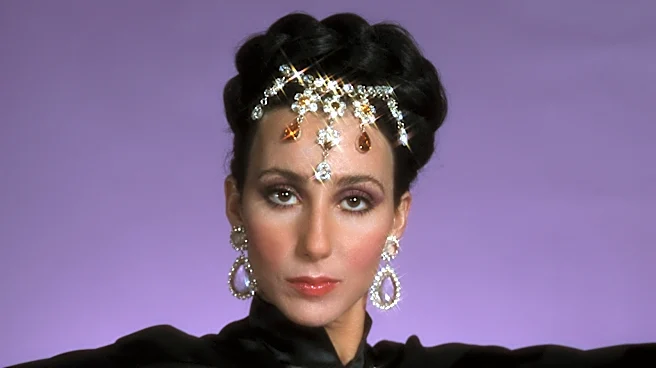
The strong shoulder isn't a new invention; it's a silhouette with a rich history. While its origins trace back to menswear and even 19th-century American football padding, it entered women's fashion in the 1930s. Designer Elsa Schiaparelli famously used shoulder pads to give women a bold, confident frame during a period of global uncertainty. This look became synonymous with wartime resolve in the 1940s, as women took on new roles in society. But the silhouette is most famously associated with the 1980s. Dubbed "power dressing," the exaggerated shoulder became the uniform for women entering male-dominated corporate environments. Shows like "Dynasty" and films like "Working Girl" cemented the image of the wide-shouldered suit as a symbol of female ambition and authority.
More Than Just Boardroom Armor
Today, the resurgence of the strong shoulder isn't just a repeat of the 1980s. While the original power suit was often about helping women assimilate into a man's world by adopting a more masculine silhouette, the modern interpretation is different. It's less about fitting in and more about unapologetically taking up space. The new power shoulder, seen on runways from Saint Laurent to Balenciaga, is about architectural presence and personal authority, whether you're in a boardroom or at brunch. It's a statement of self-assurance that isn't tied to a specific professional context. It has evolved from being a tool for survival in a man's world to a tool for self-expression in anyone's world.
How to Wear the Line Today
Incorporating a strong shoulder into your wardrobe doesn't mean you have to look like you've stepped out of a time machine. The modern approach is all about balance. The key is to let the shoulder be the statement piece. Pair an oversized blazer with something more streamlined on the bottom, like tailored trousers, a pencil skirt, or fitted jeans, to create a proportional look. Even a simple padded t-shirt or a knit top with structured shoulders can provide that subtle confidence boost. Cinching the waist with a belt is another way to highlight the hourglass shape created by the broad shoulders, preventing the silhouette from overwhelming your frame. The goal is to look structured and intentional, not like you're wearing a costume.