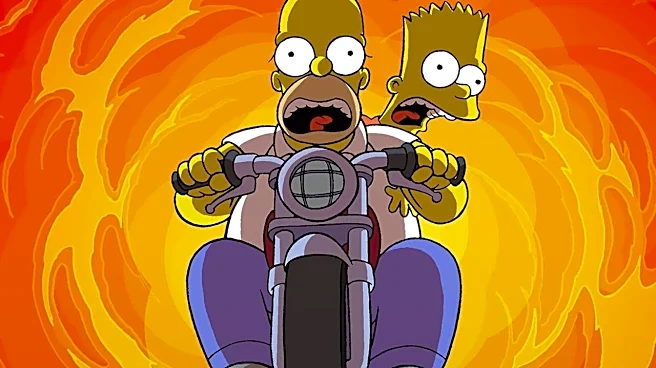




For decades, 'The Simpsons' 'Treehouse of Horror' has been a Halloween staple, offering bite-sized parodies. But as television horror evolves into long-form, serialized stories, the classic anthology format reveals a fundamental clash in what we ask of our
spooky entertainment.
The Joy of No Consequences
The magic of a 'Treehouse of Horror' segment is its glorious disposability. For about seven minutes, the rules of Springfield are suspended. Characters can be killed, turned into monsters, or subjected to cosmic horrors, all without any impact on next week's episode. This non-canon approach, inspired by old EC Comics and 'The Twilight Zone', allows for a rapid-fire delivery of gags and pop culture parodies. The goal isn't to build sustained dread but to lampoon horror tropes, from 'The Shining' to 'A Nightmare on Elm Street'. The pleasure comes from the punchline, the clever twist on a familiar story, and the sheer absurdity of seeing Homer eat his own donut-head. It’s a low-stakes, high-reward model that prioritizes laughter over genuine fear. The format is a haunted house ride: you get a quick jolt, you laugh, and you move on to the next room, no strings attached.
The Age of Emotional Investment
Contrast that with the dominant force in modern horror television: the serialized narrative. Shows like 'The Haunting of Hill House', 'Midnight Mass', or 'Stranger Things' demand a different kind of audience commitment. These series aren't just telling a spooky story; they're building a world and delving deep into the psychological and emotional lives of their characters over many hours. The horror in these shows is rarely the punchline. Instead, it’s intricately woven into family trauma, grief, faith, and complex relationships. We spend hours getting to know the Crain family or the residents of Crockett Island, and that investment is what gives the scares their weight. A ghost isn't just a ghost; it’s a manifestation of a character's past trauma. This long-form approach aims for pathos, creating a slow-burn dread that lingers long after the credits roll.
Parody vs. Pathos
Herein lies the fundamental clash. 'Treehouse of Horror' is built on parody. It keeps the audience at a distance, inviting them to appreciate the cleverness of the reference rather than feel the character’s terror. When Mr. Burns is presented as a vampire, the joke is in the absurdity of the casting, not in a genuine fear for Homer’s life. Serialized horror, on the other hand, strives for empathy and immersion. Its effectiveness hinges on making you care deeply about the characters' fates. The horror works because you’ve become attached to them and feel their peril as if it were your own. The two formats operate on opposing principles. One deconstructs horror tropes for comedic effect, while the other uses those same tropes to build genuine emotional stakes. One wants you to laugh at the ridiculousness of a situation; the other wants you to feel the weight of it.
Two Appetites, One Holiday
Ultimately, the 'clash' isn't a critique of either format but an acknowledgment of their different goals. You can't get the deep, novelistic satisfaction of a Mike Flanagan series from a seven-minute cartoon parody, nor should you expect to. Likewise, asking a show like 'The Haunting of Hill House' to deliver the breezy, gag-a-minute fun of a 'Treehouse' segment would be missing the point entirely. They cater to different Halloween cravings. Sometimes you want a fun-size candy bar—a quick, sweet, disposable treat. That’s 'Treehouse of Horror'. Other times, you want a rich, multi-course meal that you’ll be thinking about for days. That's serialized horror. The modern television landscape is big enough for both, but trying to merge their philosophies is like trying to mix oil and water—or, perhaps more fittingly, blood and holy water.