



More Than Just a Princess Movie
When the animated 'Moana' sailed into theaters in 2016, it was more than just another hit. It was a landmark moment for Pacific Islander representation, a community long stereotyped or ignored by Hollywood. Disney, to its credit, seemed to understand
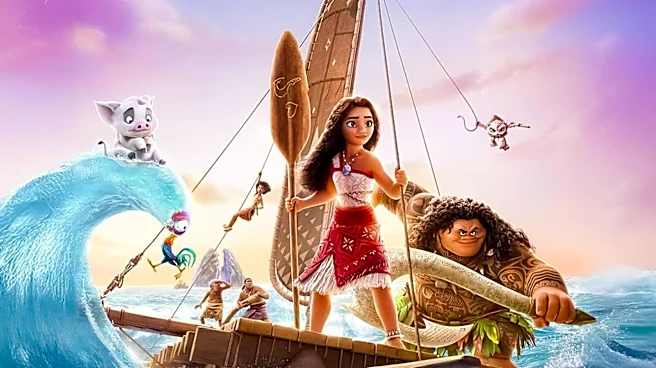
the stakes. The studio formed an Oceanic Story Trust, a group of cultural advisors who consulted on everything from mythology to the design of a fish hook. The result was a film that, while a pan-Polynesian blend, felt deeply respectful. It gave millions of children a hero who looked like them and celebrated a rich heritage of wayfinding. Now, with a live-action remake, the bar is even higher. The goodwill earned by the original film has created a fierce sense of ownership among the very communities it depicted.
The Tightrope of Authentic Casting
The decision by Auliʻi Cravalho, the original voice of Moana, not to reprise her role set the tone for the entire production. In a widely praised move, Cravalho, now in her 20s, explained it was vital to “pass this baton to the next young woman of Pacific Island descent.” She remains an executive producer to help ensure the film accurately represents the story. This put immense pressure on the casting of her successor. The role ultimately went to Catherine Laga'ia, a 17-year-old Australian actress of Samoan heritage. While the creative team has praised her performance, the public scrutiny began instantly. Online discussions have already analyzed everything from her specific ancestry to the styling of her hair in promotional materials, with some fans arguing it doesn't look as naturally curly as the animated character's. This level of detail demonstrates that for a story this specific, 'close enough' isn't good enough.
The Maui Exception and The Rock
In stark contrast to the intense focus on the new Moana, Dwayne 'The Rock' Johnson's return as the demigod Maui has been met with near-universal approval. Johnson, who is of Samoan descent, was instrumental in getting the live-action remake off the ground and is a producer on the film. His deep personal connection to the role, which he has said is inspired by his grandfather, gives his casting an unassailable authenticity. He is not just an actor playing a part; he is arguably one of the most famous and influential Polynesian people on the planet, acting as a cultural ambassador for the story. This creates a unique 'Maui exception'—his star power and heritage shield him from the kind of scrutiny that a lesser-known actor in the same role, or even the lead actress, must inevitably face. His involvement gives the project a powerful anchor of credibility.
Why Pixels Matter Less Than People
For decades, Disney has been a pioneer of cinematic visual effects. From the majesty of 'The Lion King's' Pride Lands to the intricacies of 'Frozen's' ice palaces, the studio's technical prowess is legendary. There is little doubt that the CGI in 'Moana'—especially the living ocean, a character in its own right—will be breathtaking. Yet, for this particular film, that is secondary. Disney's recent live-action remakes have faced a whirlwind of casting controversies, from 'The Little Mermaid' to 'Snow White', often sparking heated debates about race and faithfulness to the source material. But 'Moana' is different. Its story is not a European fairytale that can be reinterpreted with a diverse cast; its very essence is tied to the specific, real-world cultures of the Pacific Islands. A misstep in casting, even a subtle one, risks being seen not as a creative choice, but as a cultural failure. Getting the people right is more important than perfecting the pixels, because the soul of 'Moana' lies in its authenticity.