
The Icon and the Question Mark
When Lionel Richie was honored with the Icon Award at the 2022 American Music Awards, the tribute was a masterclass in musical history. Stevie Wonder and Charlie Puth dueled on pianos, performing a medley
of hits that defined the sound of the ‘70s and ‘80s. For anyone over 35, it was a joyous celebration of a titan. For a sizable portion of the younger viewing audience, it was a moment of genuine confusion. The social media reaction wasn’t malicious; it was simply honest. A generation raised on algorithmically curated Spotify playlists and 15-second TikTok sounds had a simple question: who is this guy, and why is he so important? This phenomenon isn’t new. In 2017, when Diana Ross received the Lifetime Achievement Award, a similar dynamic played out. While industry peers and older fans bowed in reverence to the Supreme queen, a younger demographic struggled to connect the dots between her and the current chart-toppers. The “clash” isn’t about disrespect. It’s a symptom of a fractured media landscape where musical canons are no longer universal.
It's Not Just an Age Gap
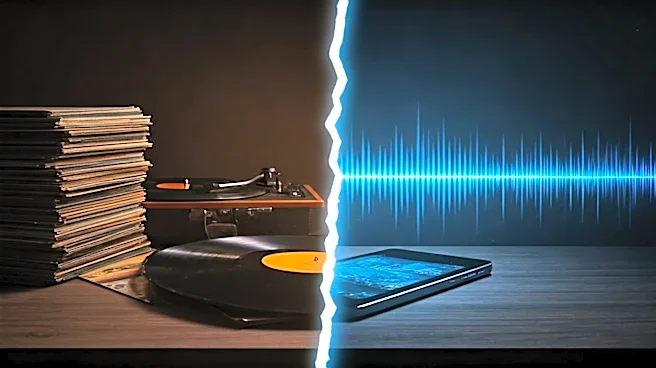
It’s easy to dismiss this as kids not knowing their history, but that misses the bigger picture. In the pre-internet era, a handful of radio stations, TV channels, and record stores created a cultural monoculture. Superstars like Michael Jackson, Prince, or Madonna (all previous AMA Merit Award winners) were inescapable. Their music was the wallpaper of public life. You didn’t have to be a fan to know who they were; the culture made sure you did. Today, that shared cultural space has been shattered into a million personalized feeds. A teenager’s musical world might consist entirely of hyper-pop, K-pop, and drill rap discovered via TikTok, with little to no overlap with the classic rock, soul, and pop that dominate their parents’ playlists. There is no central pipeline. An artist can be a god in one demographic and a complete unknown in another. So when the AMAs pause the celebration of today’s hits to honor a legacy act, it’s like switching the channel to a show that half the audience has never been programmed to watch.
The Real Purpose of a Legacy Award
This begs the question: if a large part of the target audience doesn’t recognize the honoree, what’s the point? The purpose of a lifetime achievement award isn’t just to reward past success; it’s to perform a crucial act of cultural curation. It’s the music industry’s attempt to build a bridge between the past and the present. The award tells the audience, “Pay attention. This person’s work is the foundation for the music you love today.” The tribute performances are a key part of this educational mission. When a contemporary artist like Charlie Puth performs a Lionel Richie song, it’s an act of translation. It frames the classic hit in a modern context, implicitly telling younger fans that this music is still relevant, still vital. The award isn’t just a gold statue; it’s a primetime history lesson, forcing a moment of reflection in a culture obsessed with what’s next. It’s a declaration that legacy matters, even if it doesn’t trend on TikTok.
When the Bridge Holds Strong
Of course, this generational gap isn’t always a chasm. Some artists manage to build careers that are so enduring and culturally omnipresent that they sidestep the problem entirely. When Taylor Swift was named Artist of the Decade in 2019, there was no confusion. She had successfully navigated multiple musical eras and cultivated a fanbase that spanned from millennials who grew up with her to Gen Z fans who discovered her on *Folklore*. Similarly, artists like Beyoncé or even Dolly Parton have achieved a kind of cross-generational fluency, becoming memes, icons, and active hitmakers simultaneously. Their legacy isn’t something that needs to be explained; it’s a living, breathing part of the current cultural conversation. These exceptions highlight the rule: to avoid the generational clash, an icon can’t just have a great past. They need a tangible presence in the present, whether through constant reinvention, social media savvy, or having their work consistently re-contextualized for new audiences.