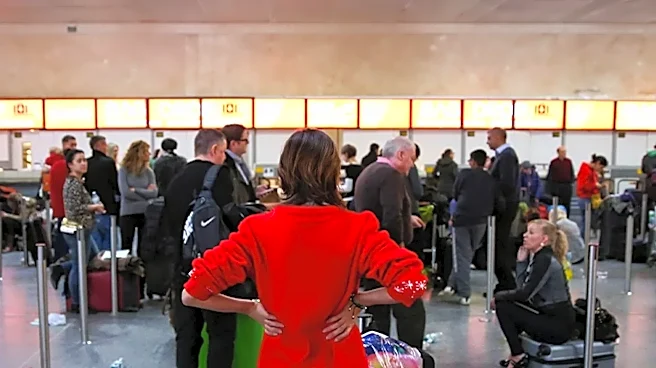







A Documentary Inside a Feature Film
The movie opens not with its star-studded cast, but with grainy, voyeuristic shots of everyday people embracing at an arrivals gate. Director Richard Curtis and his crew set up cameras for a week at Heathrow, capturing unscripted moments of joy, relief,
and love. Whenever they saw a reunion that felt right, a crew member would rush over and ask the people for permission to include them in the film. This decision to begin a glossy, high-budget romantic comedy with the raw authenticity of a documentary was a bold choice. It immediately grounds the film’s central thesis—that love, actually, is all around—in reality before a single line of scripted dialogue is spoken. It tells the audience that the stories about to unfold, as cinematic as they may be, are just heightened examples of the ordinary, powerful emotions on display right here.
The Perfect Container for a Sprawling Cast
Juggling ten different storylines is a massive narrative challenge. An ensemble film risks feeling disjointed, like a collection of unrelated shorts. The airport provides the perfect thematic container. An arrivals gate is a universal crossroads of human experience. Fathers and sons, mothers and daughters, lovers, and old friends all converge in this single space. By bookending the movie with this setting, Curtis establishes a unifying theme that connects every disparate character, from the Prime Minister to the grieving widower to the aging rockstar. The airport acts as the film’s emotional anchor, reminding us that despite the varying specifics of each plot—unrequited love, workplace affairs, language barriers—they all stem from the same fundamental human need for connection that we witness in its purest form at the gate.
Setting the Stakes Beyond Romance
Hugh Grant’s opening voiceover does more than just set a sentimental tone; it adds a layer of unexpected gravity. He explicitly mentions the phone calls made from the planes on 9/11, noting they were not messages of hate, but of love. Released in 2003, in a world still processing that trauma, this reference immediately elevates the film. It broadens the definition of 'love' beyond just romance, positioning it as an antidote to a world filled with 'hatred and greed'. The stories that follow explore this broader spectrum: the platonic love between Billy Mack and his manager, the familial love between a stepfather and stepson, and the enduring love Karen has for her family even in the face of betrayal. The airport frame, a place of profound greetings and goodbyes, reinforces that these non-romantic loves are just as vital and central to the human experience.
An Ending That Brings It All Home
The film’s climax isn’t one single event, but a montage of resolutions that culminates, fittingly, back at Heathrow a month after Christmas. We see young Sam’s successful dash through the terminal to say goodbye, a classic rom-com trope played out in the film's signature setting. But the final sequence is more profound. It shows the film’s characters—Juliet and Peter, a reunited Karen and Harry, a newly coupled Prime Minister—blending seamlessly back into the crowd of real-life travelers, their stories becoming just one part of the larger human tapestry. This brings the film full circle. The message is clear: the film is over, but the story it was telling continues all around you. The fictional characters dissolve back into the real-world montage they emerged from, reinforcing the idea that these extraordinary stories of love are, in fact, beautifully ordinary.