





The Final Frontier of Fashion
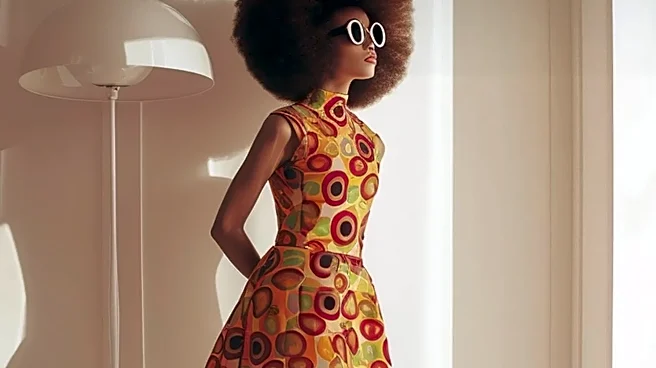
The 1960s weren't just about peace and love; they were about progress and paranoia, all fueled by the Cold War Space Race. As the U.S. and Soviet Union aimed for the moon, designers on Earth started looking to the stars for inspiration. Figures like André
Courrèges, Pierre Cardin, and Paco Rabanne pioneered what became known as the “Space Age” aesthetic. Courrèges, with his background in architecture, created architecturally-sculpted coats and angular minidresses. He favored stark white and silver color schemes, geometric shapes, and accessories like flat boots and goggles that looked borrowed from an astronaut's locker. This new uniform for the modern woman was clean, liberating, and utterly futuristic.
Designing for a World That Didn't Exist
These designers weren't just making clothes; they were building a new world. Pierre Cardin famously said he was creating for a life that “does not yet exist.” His work featured bold, geometric silhouettes, circular cut-outs, and a fascination with new, man-made materials like vinyl and PVC. Paco Rabanne took this even further, abandoning needle and thread for pliers and metal rings. His 1966 collection, titled “12 Unwearable Dresses in Contemporary Materials,” featured chainmail-like garments made of plastic and aluminum discs, which Coco Chanel famously dismissed by calling him a “metal worker,” not a couturier. Unwearable or not, these pieces cemented a visual vocabulary for the future: minimalist, architectural, and often made of materials that had nothing to do with traditional fabric.
From the Runway to the Stars
This new aesthetic quickly jumped from the runway to the silver screen. Stanley Kubrick’s seminal 2001: A Space Odyssey and TV shows like Star Trek absorbed this clean, structured look, establishing it as the official uniform of tomorrow. The minidresses, bold colors, and go-go boots of the 1960s became inextricably linked with sci-fi. Jane Fonda’s outfits in the 1968 cult classic Barbarella, some designed by Rabanne himself, perfectly captured this blend of high fashion and intergalactic adventure. The style was so potent that it didn't just predict the future; it created the visual shorthand for it, a language that filmmakers still use today.
The Ghost in the Machine
Today, these 1960s echoes are so ingrained in sci-fi that we often don't even see them. The sleek, somber suits of Gattaca (1997) may feel timelessly futuristic, but their minimalist, uniform-like quality is a direct descendant of that mid-century aesthetic. Costume designer Colleen Atwood blended styles from the '30s and '80s but the clean, almost antiseptic look of the “valids” owes a clear debt to the utopian (and dystopian) visions of the 60s. Even in the wildly elaborate world of The Hunger Games, the stark, imposing uniforms of the Capitol's peacekeepers and the functional, austere clothing of the districts both play with themes of control and conformity first explored by these Mod-era visionaries. The designers for the films researched constructivism and futurism, tapping into the same impulses that drove Cardin and Courrèges. The original context may be forgotten, but the aesthetic DNA remains, a testament to a time when the future felt so close you could wear it.