






The Classic Group of Death
First, a quick refresher. For decades, the World Cup featured 32 teams split into eight groups of four. Only the top two from each group advanced. This simple, brutal math created the perfect conditions for a “Group of Death.” The term describes a group where
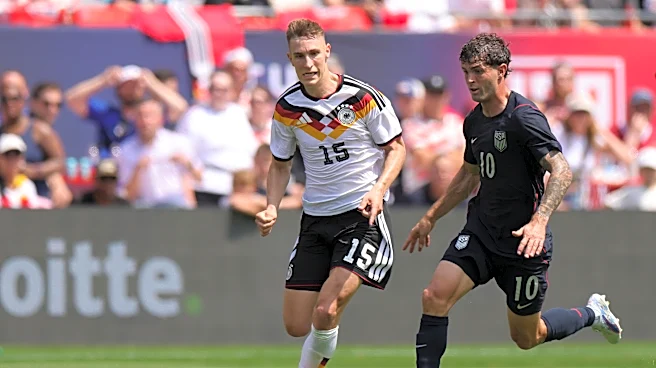
at least three, sometimes even four, highly-ranked teams are drawn together, guaranteeing that at least one powerhouse would be sent home in tears after just three games. Think of 2014, when the USA was drawn with Germany, Portugal, and Ghana. Every single match felt like a knockout game because it was. There was no safety net. It was pure, high-stakes, stomach-churning television, and the drama was baked into the structure. The draw itself was a must-see event, with entire nations holding their breath to see if they’d land in a group of manageable opponents or a pit of vipers.
The 2026 Format Revolution
Enter the 2026 World Cup, co-hosted by the U.S., Mexico, and Canada. The tournament is getting a major facelift, expanding from 32 to 48 teams. This expansion fundamentally changes the math and, in doing so, changes the nature of danger. Instead of eight groups of four, we will now have 12 groups of four. More teams, more games, more soccer—all sounds great. But the most significant change isn't the size of the tournament; it's the new rule for who gets to advance to the knockout stage. And that’s where the classic Group of Death begins to dissolve.
The Third-Place Safety Net
Here's the killer detail: In the 2026 format, it’s not just the top two teams from each group that advance. In addition to those 24 teams (two from each of the 12 groups), the eight best third-place teams will also move on to a newly created Round of 32. This is a game-changer. Suddenly, finishing third in your group is no longer a death sentence. In fact, for two-thirds of the groups, it’s a ticket to the next round. This dramatically lowers the stakes of the group stage itself. A team could lose its opening match against a titan, draw its second, and still have a very realistic path forward. The immediate, suffocating pressure that defined the Group of Death—the knowledge that one bad result could be fatal—is largely gone. The group stage becomes less of a guillotine and more of a complex seeding exercise.
A New Kind of Danger Emerges
So, is the concept dead? Not exactly. It's just evolving. The danger hasn't been eliminated; it has been postponed. The new “Group of Death” won’t be about which giant gets knocked out in the first week. It will be about how a tough group draw cripples a team’s chances in the knockout rounds. For example, battling through a difficult group might leave a team battered and bruised. Finishing second or even third in that group could mean facing a dominant group winner in the Round of 32 or Round of 16. The punishment for being in a tough group is no longer immediate elimination, but a much harder path to the final. A strong team might survive its group only to be exhausted and rewarded with a matchup against France or Brazil. The terror is still there, it just lives in the bracketology of the knockout stage rather than the standings of the group stage.