









It’s an Instant Power Move
In a professional setting, the default uniform is designed for blending in. A navy, gray, or black suit is a gesture of respectability and conformity. A statement suit—whether in a shocking pink, an electric blue, or a dramatic, wide-shouldered silhouette—is
an act of declaration. It says, “I am not here to simply fit in; I am here to be seen.” This choice projects an immediate sense of confidence and control. When you walk into a room wearing something that intentionally breaks the mold, you are communicating non-verbally that you are comfortable taking up space, leading the conversation, and owning your presence. Think of the psychological effect: you’re not just wearing clothes, you’re wearing armor infused with intent. This isn’t arrogance; it’s authority. It’s the sartorial equivalent of taking the head of the table before anyone else has a chance to sit down.
You Instantly Become Memorable
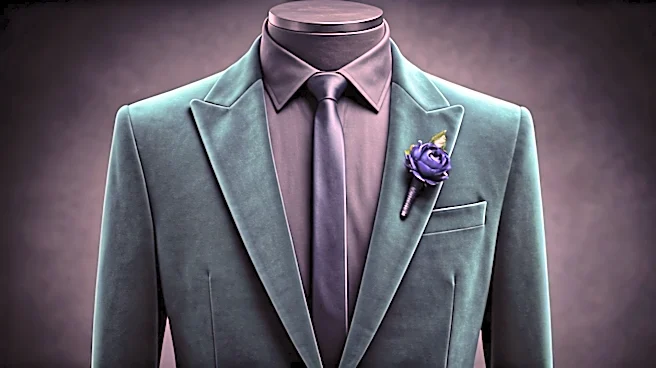
On a night filled with high achievers, memorability is a currency. After the awards are handed out or the big deal is closed, people will remember two things: what you accomplished and how you made them feel. A statement suit helps anchor you in their memory. In a sea of black tuxedos and conventional cocktail dresses, a sharp, emerald green velvet suit or a perfectly tailored lilac ensemble becomes a visual landmark. This is personal branding 101. Celebrities like Zendaya and Timothée Chalamet have mastered this on the red carpet. They don’t just wear designer clothes; they use their outfits to tell a story and create an unforgettable image. For the biggest night of your career, you are the star of your own movie. Dressing the part ensures that when people recall the event, your image doesn't fade into the background. You’re not just “the person who won the award”; you’re “the person in that incredible suit who won the award.”
It Broadcasts Authenticity and Courage
Choosing a statement suit is an act of vulnerability. It reveals something about your personality, your taste, and your willingness to take a risk. In a corporate or formal world that often rewards a polished but impersonal façade, this flash of authenticity can be incredibly powerful. It signals that you are not a cog in the machine but an individual with a point of view. This resonates with people. It shows you have the courage of your convictions, not just in your work but in your self-expression. There’s a psychological concept called “enclothed cognition,” which suggests that the clothes we wear can influence our cognitive processes. Wearing a suit that feels uniquely “you” can boost your self-assurance, making you perform better, speak more clearly, and connect more genuinely with others. You’re not playing a part; you’re stepping into the most confident version of yourself.
It Redefines the Rules of Power
For decades, the “power suit” had a narrow definition, often involving masculine tailoring and somber colors. Today, the statement suit is rewriting those rules. When women like Vice President Kamala Harris wear an all-white suit—a nod to the suffragettes—or when male actors embrace softer fabrics and bolder colors, they are subverting traditional expectations of power and gender. A statement suit can be a modern, inclusive symbol of authority. It doesn’t rely on old archetypes of boardroom dominance. Instead, it draws its power from creativity, individuality, and a forward-thinking perspective. By choosing one, you’re not just making a choice for yourself; you’re participating in a larger cultural shift about what success and leadership look like. You’re showing that power doesn’t have to be rigid, uniform, or colorless—it can be dynamic, vibrant, and personal.