




A Sermon Etched in Skin
In the 1955 film “The Night of the Hunter,” Robert Mitchum plays Reverend Harry Powell, a sociopathic charlatan who marries and murders widows for their money. The film's most famous scene isn't a murder, but a monologue. Powell, sensing a skeptical audience
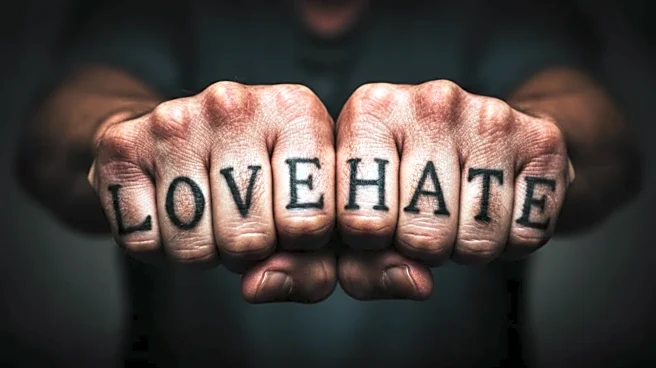
in a young boy, performs a story of good versus evil using his tattooed fists as puppets. "The right hand, friends, the hand of love," he croons, before wrestling his own hands in a primal struggle. "Hot dog, love's a winning!" he declares, as his left hand of hate is pinned. The scene is hypnotic, terrifying, and established one of cinema’s greatest villains.
An Actor's Only Shot at Directing
The film was the first and only directorial effort from the legendary actor Charles Laughton. After reading Davis Grubb’s 1953 novel, Laughton was captivated by its “nightmarish Mother Goose” quality and hired writer James Agee for the screenplay. Grubb's novel, inspired by the true story of a Depression-era serial killer, introduced the unforgettable image of the tattooed knuckles. Laughton, determined to bring this gothic fable to life, storyboarded many of the shots based on sketches provided by Grubb himself. For his magnetic and monstrous preacher, Laughton wanted only one man: Robert Mitchum.
Hollywood Myth vs. On-Set Reality
A persistent Hollywood legend claims Mitchum, ever the rebellious bad boy, was drunk for much of the shoot. Some tales even suggest Laughton had to use a hand double for the famous sermon because Mitchum was too intoxicated to perform. However, accounts from the set paint a different picture. While Mitchum’s off-set behavior could be unpredictable, he was a consummate professional for Laughton, whom he deeply admired. Mitchum often stated that Laughton was his favorite director and that Harry Powell was his best performance. Laughton, in turn, called Mitchum “one of the best actors in the world.” The story about Mitchum directing the child actors himself after Laughton grew frustrated was also an invention, a tale Mitchum later admitted he made up for his autobiography.
A Collaboration For The Ages
Far from being a drunken accident, the iconic scene was a product of meticulous craftsmanship and mutual respect. Laughton, an actor himself, knew how to communicate with his star. He encouraged Mitchum's creative input, allowing the actor to shape the character's unsettling blend of menace and buffoonery. The result is a performance of chilling precision. Mitchum’s Powell isn't just a monster; he’s a performer, and the LOVE/HATE sermon is his grandest stage trick. The scene’s power comes from the terrifying realization that this man’s evil is not just impulsive, but theatrical and self-aware.
A Legacy That Won't Die
While “The Night of the Hunter” was a commercial and critical failure upon release—so much so that Laughton never directed again—its reputation has only grown. The LOVE/HATE tattoos have become a permanent fixture in popular culture, a visual shorthand for the duality of human nature. The most famous homage came in Spike Lee's 1989 masterpiece, “Do the Right Thing,” where the character Radio Raheem delivers a powerful update of the sermon using gold rings. From music to other films, the influence of Harry Powell's fisted sermon continues, proving that while the film may have flopped, its chilling message about the battle within us all is eternal.