

An Unconventional Beginning
Born in 1909 with severely limited vision, Art Tatum learned to navigate the world primarily through sound. This profound reliance on his ears shaped his musical development. While he had some formal training, he was largely self-taught, famously learning
to play by ear from piano rolls his mother played. Legend has it that as a child, he could play music meant for four hands, simply unaware it was written for two people. This innate ability to hear and deconstruct complex music formed the bedrock of his genius. He wasn't just playing notes; he was internalizing the entire architecture of a song and preparing to rebuild it in his own image.
The Orchestral Left Hand
Early jazz piano was often defined by the "stride" style, where the left hand would jump between a bass note and a chord, providing a steady rhythm. Tatum’s influences, like James P. Johnson and Fats Waller, were masters of this. But Tatum took it further. His left hand didn’t just keep time; it became a second voice, weaving intricate counter-melodies and powerful, orchestral harmonies that provided a dense, rich foundation. Where other pianists had a rhythm section in their left hand, Tatum had a full orchestra, creating a sound so complete that many musicians found it nearly impossible to play alongside him.
Harmonic Wizardry: Rebuilding Songs from Scratch
Perhaps the single most defining element of Tatum’s sound was his revolutionary use of harmony. He was a pioneer of reharmonization, the act of taking a standard song and swapping out its original chords for more complex, surprising ones. He could take a simple tune like "Tea for Two" and transform it into a symphonic journey, filled with substitute chords, new passing chords, and harmonic detours that were light-years ahead of their time. This practice, which influenced the bebop movement that followed, was a key reason his style was so hard to copy. You couldn't just learn his licks; you had to understand his brain and how he heard music, pulling apart and reassembling songs with a logic that was entirely his own.
Velocity and a Feather-Light Touch
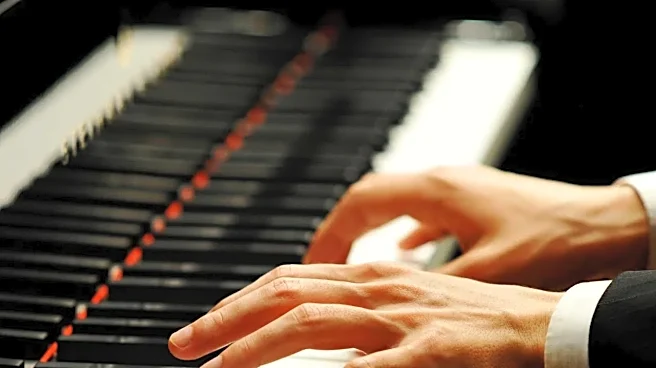
Tatum’s speed was legendary. His right hand could unleash flawless, lightning-fast runs that left other musicians breathless. A young Charlie Parker famously took a job washing dishes in a club just so he could listen to Tatum, later saying he wished he could play like Tatum's right hand. But it wasn't just about speed; it was about precision and touch. Observers noted his unique, flat-fingered technique, where his hands seemed to glide horizontally across the keys with minimal effort. Pianist Chick Corea remarked that Tatum had a "feather-light touch," capable of producing beautiful tones even at shocking tempos. This combination of blistering speed and delicate control made his arpeggios sound like a cascade of polished silver, a texture almost no one else could replicate.
The Musician's Musician
Ultimately, the greatest testament to Tatum’s inimitable sound came from his peers. He was a musician’s musician, a player who inspired a mixture of reverence and sheer terror. Acclaimed classical pianists like Vladimir Horowitz and Sergei Rachmaninoff were reportedly astounded by his skill. Jazz greats from Oscar Peterson to Coleman Hawkins cited him as a primary influence, someone who fundamentally altered their understanding of what was possible on their instruments. The consensus was clear: Art Tatum wasn't just playing a different style; he was playing a different game entirely. Many tried to copy him, but as the saying goes, they could never truly "imitatum."