

The Two-Second Explosion
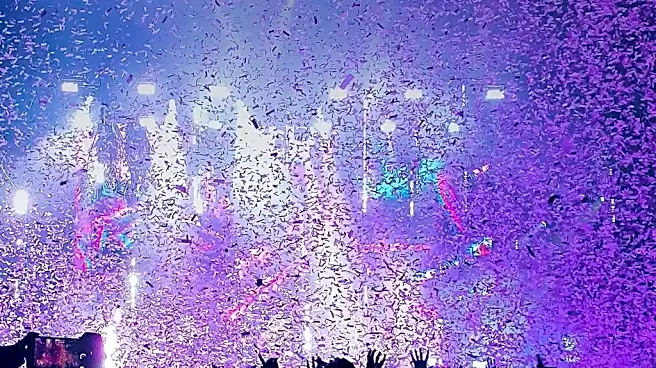
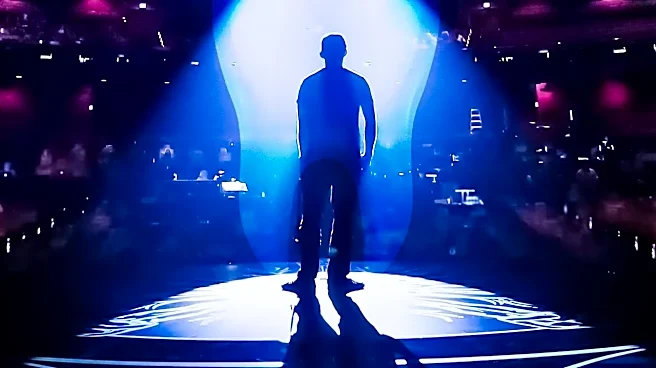
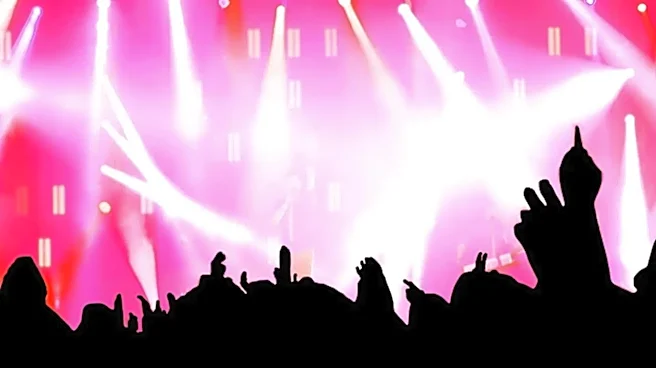
It’s one of the most powerful phenomena in live music. An artist walks on stage, the lights drop, and a familiar sequence of notes slices through the air. In less time than it takes to read this sentence, the entire arena explodes. It’s a purely Pavlovian
response, a sonic cue that bypasses the analytical part of the brain and hits directly at memory and emotion. That opening riff is more than just the start of a song; it’s a key that unlocks a flood of associations. It’s the soundtrack to a thousand late-night drives, the anthem of a past summer, or the song that got you through a tough week. When you hear it live, you aren't just recognizing a tune. You're connecting with a piece of your own history, and you're doing it at the exact same moment as thousands of strangers around you, creating a powerful, instantaneous community.
Anatomy of a Sonic Trigger
So what makes a riff a trigger? The formula is deceptively simple. The most effective riffs are often built on a short, repeatable, and rhythmically compelling pattern. Think of the four-note motif of Deep Purple’s “Smoke on the Water,” a progression so elemental that it's often the first thing a budding guitarist learns. Or consider the fuzzy, three-note declaration of The Rolling Stones’ “(I Can’t Get No) Satisfaction.” These riffs work because they are both simple enough to be instantly memorable and unique enough to be unmistakable. They function like a brand's logo, conveying a full identity in a compact form. Psychologically, our brains are wired to find pleasure in pattern recognition. When a riff repeats, it creates a sense of predictability and familiarity, which feels good. A truly great riff balances this comfort with a touch of distinctiveness—a unique guitar tone, a syncopated rhythm, or an unexpected chord that makes it stand out.
Rock Royalty on the Vegas Strip
This year's iHeartRadio Music Festival lineup is a case study in riff-driven rock. The Smashing Pumpkins, who will be taking the stage, are masters of the art. The opening drum roll and fuzzed-out guitar line of “Cherub Rock” is an immediate call to arms for any 90s alt-rock fan. Weezer, another band on the bill, has a catalog full of them, from the clean, arpeggiated intro of “Say It Ain't So” to the chunky, irresistible chords of “Buddy Holly.” Then there’s Muse, a band known for building entire stadium-sized anthems on the back of monstrous bass and guitar riffs like those in “Hysteria” or “Plug In Baby.” For these artists, the opening riff isn’t just an introduction; it’s the song’s DNA, the anchor that grounds every verse and chorus that follows. When those first notes ring out across the T-Mobile Arena, they will serve as an immediate signal to the faithful.
Beyond the Six-String
But the concept of a “riff” isn't limited to guitars. A crowd trigger can be any signature sound that announces a song's arrival. Think of the iconic G-funk synth whistle that kicks off Snoop Dogg's “Gin and Juice”—another artist gracing this year's festival stage. That high-pitched, melodic line is as recognizable as any guitar lick. The same goes for the world of pop and hip-hop. The opening beat and ad-libs of a Cardi B track can send a crowd into a frenzy just as effectively as a power chord. K-pop titans like BTS, also on the lineup, have perfected the art of the multi-layered intro, combining vocal hooks, synth patterns, and rhythmic cues that are instantly identifiable to their massive global fanbase. Whether it's a distorted guitar, a synthesized melody, a drum machine, or a vocal hook, the principle is the same: a unique and memorable sound that promises something incredible is about to happen.