





The Mistake Itself: Harmless Gaffe or Character Flaw?
The first question is always about the nature of the error. A simple, human mistake is often forgivable. When John Travolta famously introduced Idina Menzel as the “wickedly talented, one and only, Adele Dazeem” at the 2014 Oscars, it was a bizarre but
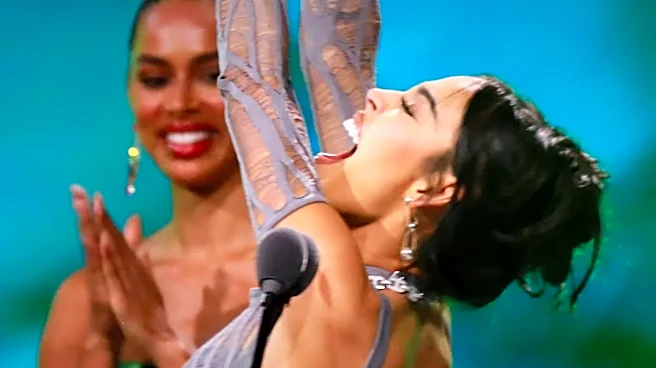
harmless mispronunciation. The flub revealed nothing malicious about Travolta; it was just a strange, inexplicable verbal trip. The public laughed because the error was absurd, not offensive. Contrast this with a mistake that suggests an underlying prejudice or gross incompetence. A gaffe rooted in ignorance or malice isn't a flub; it’s a revelation of character. The “Adele Dazeem” moment was so harmlessly weird that it immediately became a running joke, spawning name generators and memes. It was a meme-able moment because it was funny and low-stakes, not an indicator of a deeper problem.
The Immediate Reaction: Grace Under Fire or Defensive Meltdown?
How a presenter handles the seconds after a blunder is often more important than the blunder itself. Owning the mistake with grace and humor can instantly defuse a situation. When Steve Harvey mistakenly crowned Miss Colombia as the Miss Universe winner in 2015, the world cringed. But he immediately returned to the stage to correct the error himself. “I have to apologize,” he said, taking full responsibility for reading the card wrong. While the moment was excruciatingly awkward, his willingness to own it prevented it from becoming a career-ending disaster. He later embraced the flub, turning it into a running joke in subsequent hosting gigs. Similarly, after the infamous 2017 Oscars mix-up, where “La La Land” was wrongly announced as Best Picture, presenter Warren Beatty quickly returned to the microphone to explain he’d been handed the wrong envelope. His calm clarification and the graciousness of the “La La Land” producers helped turn a potential catastrophe into a shocking but understandable piece of Oscar history.
The Role of the ‘Victim’: How the Other Party Responds
The person on the receiving end of the flub plays a huge role in steering the public narrative. Idina Menzel handled the “Adele Dazeem” incident with perfect humor. She not only took it in stride but created satirical playbills for her Broadway show, billing herself as Adele Dazeem. A year later, she got her playful revenge by introducing Travolta at the Oscars as “Glom Gazingo.” Her lighthearted response gave the public permission to laugh. Likewise, Pia Wurtzbach, the rightful Miss Universe winner, was gracious amidst the chaos of the crown-swapping. She later thanked Steve Harvey, joking that he made her “the most popular Miss Universe.” When the wronged party is magnanimous, it starves the outrage machine of oxygen and frames the incident as a forgivable, if embarrassing, error.
The Meme-ability Factor: Is It Built for the Internet?
Some moments are just destined for digital immortality. A flub becomes a meme when it’s easily digestible, repeatable, and remixable. Travolta’s name mangling was audibly perfect for endless repetition. The visual of the Miss Universe crown being physically removed from one person’s head and placed on another’s was a drama-filled clip made for social media. These moments are self-contained little narratives of failure that are easy to share and joke about. In contrast, a disastrous flub is often more complex. It might involve a drawn-out controversy, a series of defensive statements, or a context that’s too grim for casual joking. The meme thrives on simplicity and absurdity; a disaster often wallows in its own complicated, reputation-shredding mess.