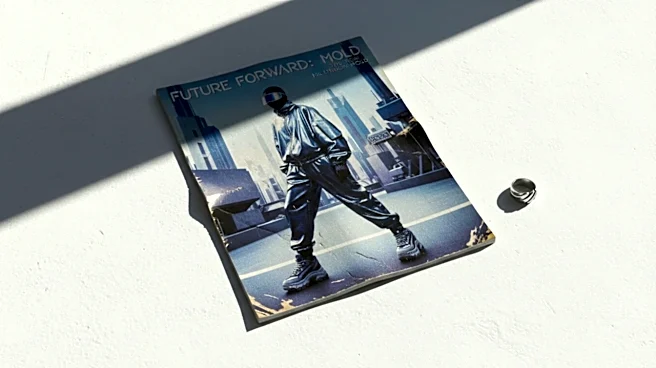










The Dawn of a Digital Dream
The late 1990s were a time of wild optimism. The internet was blossoming, and with the new millennium approaching, a futuristic Y2K aesthetic dominated, full of metallics and tech-inspired designs. Amid this digital gold rush, a wildly ambitious idea
was born: a global, high-fashion e-commerce site that would change how we shop for clothes forever. Three Swedish entrepreneurs envisioned a platform where shoppers could buy the coolest brands from anywhere in the world. It was going to be the fashion version of Amazon, a one-stop global destination for style. The name of this dream was Boo.com.
A Vision Too Far Ahead
Boo.com wasn't just a store; it was conceived as a revolutionary experience. The plan was to let users view clothing in 3D, zoom in on fabrics, and rotate items 360 degrees. Shoppers could even ask a virtual assistant, "Miss Boo," for style advice. The site launched in 18 countries simultaneously, accepting multiple currencies and calculating local taxes. But this cutting-edge vision came at a cost. The technology was too advanced for its time. In 1999 and 2000, most households were still using slow, dial-up internet connections that couldn't handle the site's heavy use of Flash and Javascript. Pages took minutes to load, and the experience, meant to be seamless, was often frustratingly clunky.
The Spectacular Crash
After a launch delayed by six months and burning through cash at an astonishing rate, Boo.com became Europe's first major dot-com casualty in May 2000. The company spent lavishly on marketing, technology, and chic offices in London, but failed to build a user-friendly platform. It had spent millions on inventory that was out of season by the time the site even launched. When the dot-com bubble burst, investor confidence evaporated, and the funding taps were shut off. Having spent hundreds of millions of dollars, Boo.com went into liquidation just six months after it finally went live, becoming a cautionary tale for the entire tech industry.
A Chilling Effect on Digital Fashion
The high-profile failure of Boo.com sent a shockwave through the business world and had a profound chilling effect on fashion e-commerce. Investors, once eager to fund any dot-com idea, became intensely risk-averse, particularly when it came to selling apparel online. Luxury brands, which were already skeptical of the internet devaluing their exclusive image, saw Boo.com's demise as proof that high fashion couldn't be sold online. This created a vacuum. The digital revolution in fashion was put on ice for the better part of a decade. While companies like Amazon began tentatively selling apparel, the ambitious, experience-driven vision of Boo.com was abandoned.
The Path We Took Instead
With the digital path blocked, another model thrived: fast fashion. Brands like Zara and H&M, with their powerful brick-and-mortar presence and rapid, trend-driven production cycles, came to define the 2000s. The decade's style became a mash-up of accessible trends: low-rise jeans, velour tracksuits, trucker hats, and boho-chic layering. It was a physical, tangible fashion world, driven by what you could find at the mall. The internet's main fashion influence came from celebrity photos and blogs, not from sophisticated online stores. The bespoke, global, digital closet that Boo.com promised would not become a reality until broadband was ubiquitous and a new generation of e-tailers, like Net-a-Porter, cautiously proved the model could work.