






1. Bringing Rocky to Life
This is the big one. Rocky, the alien engineer, is a five-legged, spider-like creature made of rock who communicates with musical chimes. Screenwriter Drew Goddard called creating a character with no face a 'nightmare' from a writing perspective. The
filmmakers must design a creature that looks alien and believable but can also form a deep, emotional bond with a human. Make him too cartoonish, and the heart of the movie fails. Make him too monstrous, and the audience won't connect.
2. Making Hard Science Cinematic
Like “The Martian,” the book is packed with detailed scientific problem-solving. While fascinating on the page, watching someone do complex math or engineer a centrifuge can be static on screen. The film has to find a way to make these moments of discovery visual, urgent, and easy to understand without lengthy exposition dumps, a challenge that requires moving beyond the book's heavy reliance on internal monologue.
3. Nailing the Narrative Structure
The story unfolds in two timelines: Ryland Grace’s present-day mission in space and the flashbacks that gradually restore his amnesia. This is a powerful tool in a novel for building mystery. In a film, jumping between timelines can feel disjointed or kill momentum if not handled with extreme care. The transitions must feel organic and serve to heighten the tension of the present-day plot, not distract from it.
4. The One-Man Show Problem
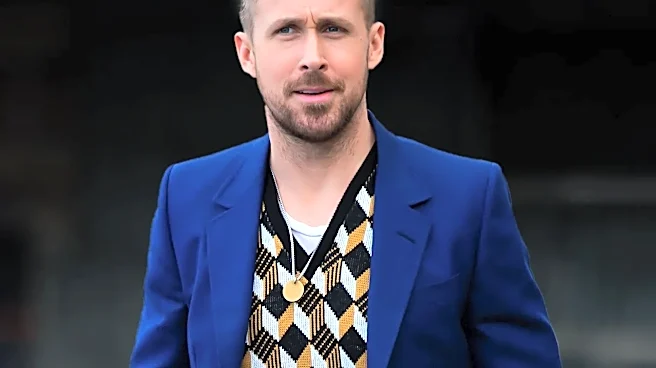
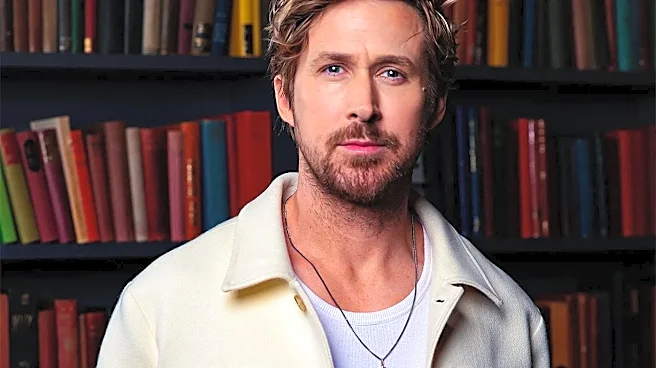
For a significant portion of the story, Grace is completely alone on the Hail Mary. A solo performance is demanding for any actor, even one as capable as Ryan Gosling. Directors Phil Lord and Christopher Miller have to create a visually dynamic and engaging experience to keep the audience invested before another character ever appears on screen, avoiding the trap of a man simply floating and talking to a computer.
5. The Burden on Ryan Gosling
Ryland Grace isn't a stoic space hero; he's a witty, empathetic, and often terrified middle-school science teacher. Much of the book's charm comes from his internal monologue—his humor, his fear, and his sheer joy in discovery. Gosling must convey all of this without the benefit of the book's narration. The success of the entire film largely rests on his ability to make Grace relatable and root-worthy from start to finish.
6. Balancing Humor and Stakes
The fate of the entire planet is at stake, yet the book is famously funny. This tonal tightrope walk is a specialty of Lord and Miller, known for films like “The Lego Movie.” They need to preserve the story's signature wit and the charming banter between Grace and Rocky without undermining the apocalyptic stakes of their mission. It’s a delicate balance between a buddy comedy and a world-ending disaster film.
7. Translating 'Fist My Bump'
One of the most beloved moments in the book is when Grace and Rocky, two completely different species, establish a shared gesture of friendship: a fist bump. It’s a beautiful, symbolic moment on the page. On screen, it could easily become cheesy or physically awkward. Finding a way to make this moment land with genuine, heartfelt emotion will be a crucial test for the filmmakers.
8. Condensing the Journey
The book covers a long, episodic journey filled with numerous scientific hurdles. A film has a limited runtime—even at a reported 156 minutes—and must be more streamlined. The script will have to condense or combine problems, which risks losing the novel’s powerful sense of scale and the sheer-grit persistence that defines Grace and Rocky's collaboration. Every cut will be scrutinized by fans.
9. Visualizing Zero-G Anew
Movies like “Gravity” and “First Man” have set an incredibly high bar for depicting the physics and feel of space. “Project Hail Mary” can't just repeat what’s been done. The team has reportedly used practical sets for the spaceship's interior to enhance realism. They must create a visual language for space travel that feels both authentic to Weir’s world and innovative in its own right.
10. Getting Eva Stratt Right
In the flashbacks, the ruthless and pragmatic leader of the Hail Mary project, Eva Stratt (played by Sandra Hüller), is a force of nature. She makes impossible decisions for the good of humanity. The film needs to capture her unwavering intensity and authority without turning her into a one-dimensional antagonist. She's not a villain; she's a savior with impossibly hard choices to make.
11. Sticking the Landing
The book’s ending is poignant, bittersweet, and thematically perfect. It defies typical Hollywood blockbuster conventions. There will undoubtedly be pressure to create a more straightforward, triumphant finale. Honoring the novel’s more complex and arguably more satisfying conclusion will be a major creative choice, one that speaks to the integrity of the adaptation.
12. The Risk of Fan Expectations
Ultimately, the biggest challenge might be the book's passionate fanbase. Readers have a powerful, personal vision of these characters and moments. Every decision—from Rocky's voice to the look of the Hail Mary—will be compared to the source material. The filmmakers have stated their goal is to honor the soul of the book, which is their best defense against the immense weight of fan expectation.