



The Last Supper
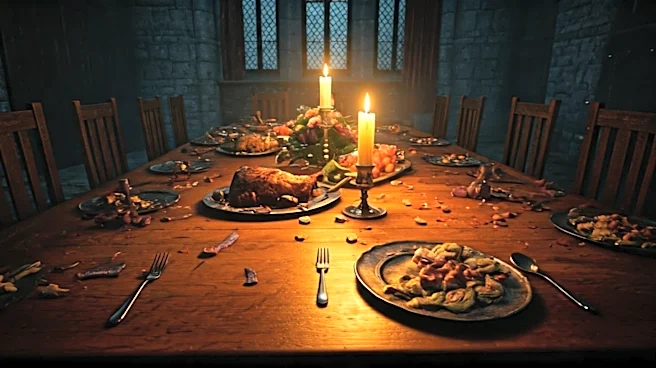
The scene in question is the doomed family supper in Season 1, Episode 8, “The Lord of the Tides.” The context is everything. King Viserys Targaryen, a man literally rotting away from leprosy, is making one last, desperate attempt to mend the catastrophic
rifts in his family. His daughter and heir, Rhaenyra, is openly loathed by his wife, Queen Alicent. Their respective children, the “blacks” and the “greens,” have been rivals since childhood, trading insults, eyes, and accusations of bastardy. The Greens believe Alicent’s son Aegon is the rightful heir; the Blacks stand with Rhaenyra. The entire kingdom holds its breath, knowing this family’s dysfunction could ignite a civil war. So when Viserys orders a family dinner, it’s not a request for a pleasant evening; it's a monarch’s final, futile prayer for peace.
A Fleeting, Fragile Hope
For a few tantalizing moments, it almost works. Viserys, in a stunning display of willpower, drags his decaying body to the Iron Throne to defend Rhaenyra's succession. Later, at the dinner, he removes his golden mask, revealing the full, horrifying extent of his decay—a profoundly vulnerable gesture. He begs his family to put aside their hatred for his sake. And incredibly, they respond. Rhaenyra raises a toast to Alicent, acknowledging her devotion to the king. Alicent, in turn, raises one back, calling Rhaenyra a good queen. It’s a breathtakingly poignant moment of reconciliation. The camera lingers on their faces, and for a split second, the audience is allowed to hope. Maybe, just maybe, they can pull back from the brink. This glimmer of peace is what makes the scene’s inevitable collapse so utterly devastating.
The Kids Are Not Alright
The tragedy of the scene, and of the entire Targaryen saga, is that the parents’ feud has already been passed down, metastasizing in the next generation. While Alicent and Rhaenyra find a moment of grace, their children cannot. They have inherited the grievance but not the love that once bound the two women together. Jacaerys, Rhaenyra’s son, asks Alicent’s daughter Helaena to dance, a clumsy but sweet attempt at diplomacy. But the boys—Aemond, Aegon, Jacaerys, and Lucerys—can’t let it go. They eye each other with pure contempt, their faces a mask of simmering rage. The parents might have called a truce, but the soldiers they raised are already committed to the war. The scene masterfully illustrates how generational trauma works: the pain of the parents becomes the identity of the children.
The Toast Heard 'Round the Realm
Every tense family dinner has a tipping point, and this one is delivered by Aemond “One-Eye” Targaryen. With a smirk dripping with malice, he rises to toast his nephews, Jacaerys and Lucerys, praising them as handsome, wise, and “strong.” It’s a word loaded with poison. “Strong” is a pointed reference to their rumored true father, Ser Harwin Strong, and thus a public declaration that they are bastards with no claim to the throne. It’s a verbal grenade tossed onto a table already soaked in gasoline. The insult is brilliant in its cruelty—deniable enough to feign innocence but sharp enough to draw blood. In that moment, Aemond isn’t just being a bully; he’s reigniting the conflict his mother just tried to quell, ensuring that the war of words will soon become one of swords and fire.
The Inevitable Collapse
The “strong” toast does exactly what it was designed to do: it shatters the peace. The boys immediately come to blows, and the dinner descends into chaos. The guards separate them, but the damage is done. The brief warmth between Rhaenyra and Alicent evaporates, replaced by the cold, familiar lines of battle. Rhaenyra decides to return to Dragonstone, realizing that King’s Landing is no longer safe. Viserys’s final effort was a complete failure. He sits amidst the wreckage of his family, a dying king who could command dragons but not his own children. The scene ends not with a bang, but with the heartbreaking whimper of a family that has chosen ruin over reconciliation. It’s a masterclass in dramatic irony, showing us a path to peace before yanking it away and confirming that the Dance of the Dragons was never avoidable.