






More Than Just Weight and Shine
When shopping for a gold or silver chain, it’s easy to get distracted by the obvious. We look at the width, the overall shine, and maybe the heft in our hand. A solid chain will indeed feel more substantial than a hollow one, which is prone to denting.
A high-karat gold will have a richer color. But these are just the opening acts. The real story of a chain’s longevity and quality isn't just about its material—it’s about how it was put together. Mass production has made it possible to create chains that look good on the surface, but a true piece of craftsmanship is built to last a lifetime, and the proof is in the links themselves.
The Hidden Detail: Soldered Links
The single most important, and most overlooked, sign of a high-quality chain is that each individual link is soldered shut. A handmade or well-machined chain involves the meticulous process of ensuring every single link that forms the chain is permanently closed with a tiny, precise weld. This is a laborious and costly step that many manufacturers skip to save time and money. On a cheaper chain, the links are simply 'butted'—bent into a circle and pressed together, leaving a tiny, almost invisible gap where the two ends meet. This small difference is everything.
Why This Tiny Seam Matters So Much
An unsoldered link is a weak point waiting to fail. That tiny gap can easily snag on clothing, a stray hair, or get caught on something and pull open. Over time, the constant, subtle stress of daily wear can widen that gap, causing the link to deform or break entirely. Once one link goes, the entire chain is compromised. A chain with soldered links, however, is a continuous, unbroken loop of metal. It’s significantly stronger, more durable, and will not pull apart under normal stress. It also provides a smoother feel against the skin and prevents the kinking that can plague lesser chains. The decision to solder every link is a deliberate investment in durability by the maker.
How to Spot the Difference
Checking for soldered links requires a close look, but you don't necessarily need a professional's toolkit. Start by examining the links near the clasp, which often take the most stress. Use your smartphone’s camera and zoom in as far as you can. Look at an individual link where the metal would join to form a closed oval. On a high-quality chain, you might see a minuscule, smooth seam where the solder point is, but you will not see a gap. On a mass-produced chain, you will likely find a visible slit where the two ends of the link are just pressed together. Run your fingernail over it; if it catches, the link is almost certainly not soldered. This simple test can be the difference between buying a chain that lasts a year and one that lasts a generation.
Other Clues to Quality Craftsmanship
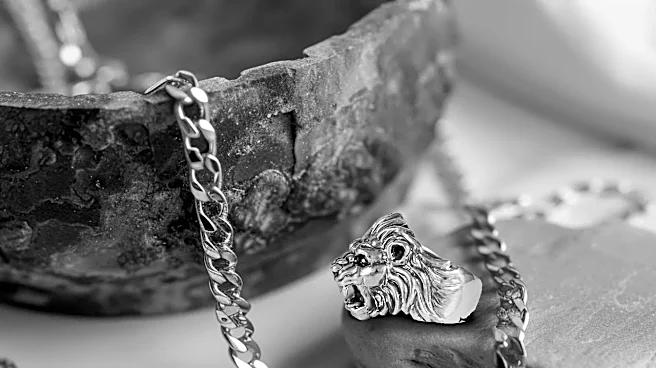
While soldered links are the main event, a few other details complete the picture of a well-made curb chain. First, check the clasp. A sturdy, secure lobster clasp is a much better sign than a flimsy spring ring clasp, which can wear out more quickly. Next, look at the finish. On a superior chain, the polishing is uniform, even on the interior edges of the links—a step often skipped in cheaper production. Finally, always look for a hallmark, a small stamp usually found near the clasp that certifies the metal's purity, such as '14K' or '585' for 14-karat gold, or '925' for sterling silver.