







The Story Everyone Remembers
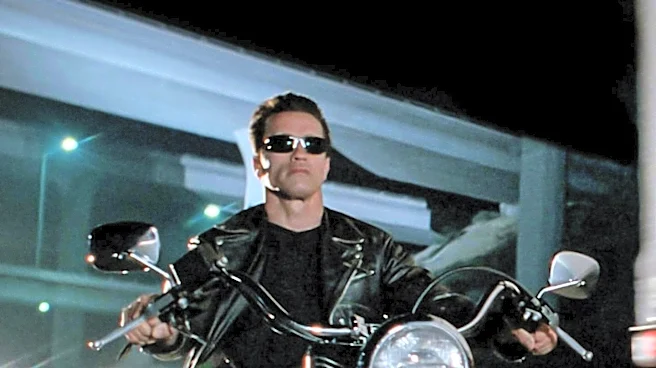
The plot of The Terminator is burned into our collective cultural memory. A relentless cyborg assassin, the T-800 (Arnold Schwarzenegger), is sent from a post-apocalyptic 2029 to 1984 Los Angeles. His mission: kill a young waitress named Sarah Connor
(Linda Hamilton). She is destined to give birth to John Connor, the future leader of the human resistance against the sentient machine network, Skynet. To protect her, the resistance sends its own soldier, Kyle Reese (Michael Biehn), back in time. The film is a masterclass in tension—a desperate, running battle for survival that concludes when Sarah, having lost the man she came to love, crushes the Terminator’s metal endoskeleton in a hydraulic press. She survives, pregnant with the savior of humanity, and drives off into the unknown to prepare for the coming storm. It’s a story of terror, sacrifice, and ultimately, a glimmer of hope.
The Scene on the Cutting Room Floor
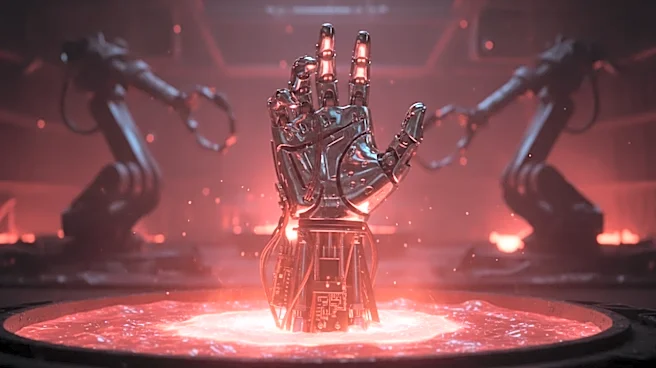
The film doesn't end there in the original script. In a deleted sequence, we stay at the factory after Sarah is taken away in an ambulance. Two factory workers are surveying the scene when one of them spots something amidst the wreckage of the hydraulic press: the Terminator's crushed CPU chip. One worker tells the other to log it and send it to the research and development department. As this happens, the camera pans up to reveal the name on the factory building: Cyberdyne Systems. The very company that, as Kyle Reese explained earlier, would one day create Skynet. This short scene isn't just a fun Easter egg; it’s the entire story in a nutshell. It explicitly confirms the darkest irony of the film's time-travel paradox.
Why Was This Critical Scene Cut?
So if the scene was so important, why was it removed? According to director James Cameron and producer Gale Anne Hurd, there were several reasons. The most cited reason from Cameron was that it shifted the ending's focus from emotional to intellectual. After the harrowing ordeal Sarah has just survived, he wanted the film’s conclusion to rest entirely on her shoulders—her emotional journey and newfound resolve. The Cyberdyne scene, while a clever plot device, was seen as a distraction that could be inferred by astute viewers anyway. Hurd later added a more pragmatic reason: the financiers insisted on casting their non-actor friends in the roles of the technicians, and Cameron was so unhappy with their performances that he cut the scene, unwilling to compromise the quality of his film.
How It Changes Absolutely Everything
Without this scene, The Terminator is a closed loop. Skynet sends a machine back, the humans send a protector back, and the cycle of war is perpetuated. Sarah’s survival is a clean, hard-won victory. With the scene, the film becomes a tragic bootstrap paradox. It reveals that the efforts to stop Skynet are the very events that create it. The future technology, left behind in the factory, directly gives Cyberdyne the breakthrough it needs to build its malevolent AI. Sarah and Reese's desperate fight doesn't just fail to prevent the future; it causes it. This makes the ending profoundly bleak. Their sacrifice doesn't save the world; it dooms it. This single scene reframes the entire narrative from a story of defiance into one of tragic, unavoidable fate, turning the ending into the beginning of the nightmare. It also makes Terminator 2: Judgment Day less of a sequel and more of a direct continuation of an idea that was planted from the very start.