





The Astronaut Goggle Sunglasses
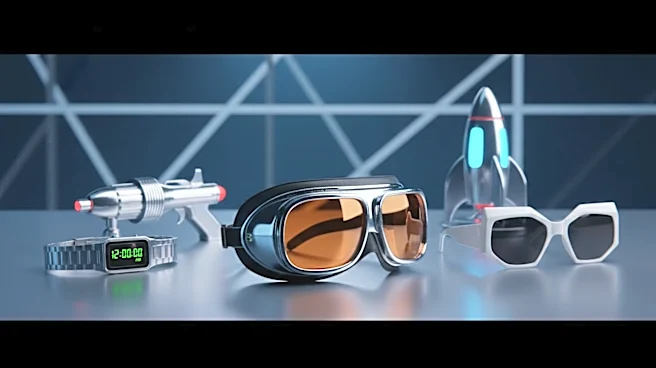
Long before today’s oversized, face-shielding eyewear became a staple of high-fashion and ski slopes, designers of the 1960s were dreaming in plastic and PVC. Spearheaded by French designer André Courrèges, whose 1964 “Space Age” collection revolutionized
fashion, these accessories were born from an obsession with astronaut gear. Courrèges, along with Pierre Cardin, created stark white and metallic accessories, including goggles and helmet-like hats, that were meant to evoke the glamour of space travel. His clean, geometric lines and use of unconventional materials created a look that was less about delicate femininity and more about a liberated, forward-moving woman. Today, those dramatic, face-enveloping shades are back with a vengeance, seen everywhere from the runway to the streets, proving that the blend of utility and high-concept fantasy is timeless.
The First Digital Watch
In 1972, the Hamilton Watch Company released the Pulsar P1, the world's first all-electronic digital watch. Housed in an 18-carat gold case, it cost more than a family car and looked like something straight out of science fiction. To see the time, you had to press a button, which would then display glowing red numerals through a ruby-red crystal screen. It had no moving parts, no ticking sound, just a solid-state 'time computer' on your wrist. This wasn't just a new way to tell time; it was a statement. It was worn by visionaries and celebrities like Elvis Presley and Keith Richards. Today, in an era of smartwatches that are essentially wrist-sized smartphones, the P1’s brutalist simplicity and single-function design feel incredibly chic and focused. Its chunky, metallic form and glowing red numbers are the aesthetic ancestors of countless modern gadgets and the entire synthwave subculture.
Paco Rabanne's Plastic Disc Jewelry
Paco Rabanne famously declared in 1966 that the only new frontier in fashion was finding new materials. He put his theory into practice with his “12 Unwearable Dresses in Contemporary Materials” collection, which featured garments made of linked plastic discs, metal plates, and other hardware. While the dresses were groundbreaking, the accessories that emerged from this philosophy—necklaces, belts, and earrings made from colorful Rhodoid plastic discs and metal rings—were arguably more influential. These pieces resembled wearable mosaics, both industrial and playful. Rabanne even sold DIY kits in suitcases for women to assemble their own creations. That spirit of modularity, industrial materials, and playful geometry is echoed today in everything from 3D-printed jewelry to avant-garde fashion that blends hardware with traditional forms. The idea of fashion as a kit of parts feels more modern than ever.
The Sculptural 'Bubble' Ring
While Courrèges and Rabanne focused on stark geometry, Pierre Cardin brought a more sculptural, organic futurism to the table. Inspired by the Space Age, he created bold, oversized jewelry that played with volume and form. His iconic 'bubble' rings and pendants from the late 1960s and 70s are perfect examples. Often made from resin, lucite, or silver, these pieces featured large, smooth, spherical shapes that looked like miniature planets or orbiting satellites for the body. They weren't just decorative; they were small sculptures. This approach—treating an accessory as a standalone piece of art—has seen a massive resurgence. Walk into any contemporary jewelry store, and you’ll find designers playing with bold, bulbous, and sculptural forms that owe a clear debt to Cardin's optimistic, pop-art vision of the future.