




It All Begins with the Fiber
The secret to wool's graceful aging starts at a microscopic level. Each wool fiber is not a smooth strand but is covered in tiny, overlapping scales, like shingles on a roof. These scales, along with a natural waviness called 'crimp', give wool its remarkable
resilience. The fiber can be bent back on itself more than 20,000 times without breaking, whereas cotton breaks after about 3,000 bends. This inherent elasticity means wool garments resist wrinkling and sagging, naturally returning to their shape after being stretched or worn. This 'molecular spring' structure is the foundation of wool's longevity, allowing it to endure years of use where other materials would simply wear out.
The Tale of Two Yarns: Worsted vs. Woolen
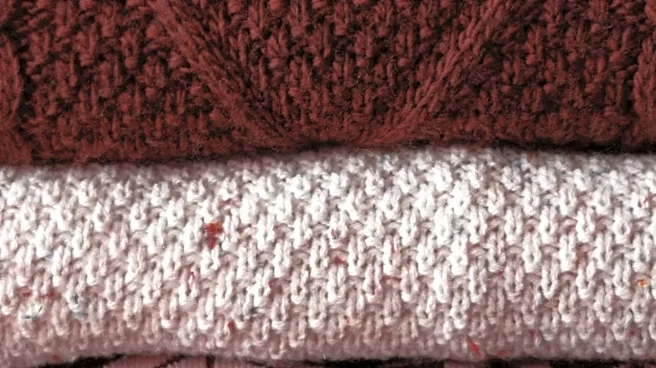
Not all wool is spun the same way, and this difference is critical to how it ages. The two main methods are worsted and woolen. Worsted spinning uses longer wool fibers, which are combed so they all lie flat and parallel before being twisted into yarn. This creates a yarn that is smooth, dense, and strong. Worsted fabrics have a clear stitch definition, a subtle sheen, and are less prone to pilling because the fibers are tightly locked in place. In contrast, woolen spinning uses shorter fibers that are jumbled together, trapping air and creating a lighter, fuzzier, and warmer yarn. While wonderfully cozy, the looser structure of woolen yarns means they can be more susceptible to abrasion. The dense, smooth surface of a worsted-spun wool is what often leads to that 'sharper' look over time, as it has the structure to withstand friction gracefully.
From Friction to Patina
The term 'patina' is often associated with leather or metal, describing the sheen that develops through age and use. High-quality wool undergoes a similar, though more subtle, transformation. When a wool garment is new, its microscopic scales can feel slightly crisp. With gentle, repeated wear, the friction from your body, combined with its warmth and moisture, causes these scales to relax and lie flat. This process is a kind of micro-felting. Instead of creating a matted mess, the fibers slowly interlock and settle, making the fabric surface smoother and softer. The garment begins to drape more naturally and conform to your body, evolving from a piece of clothing into something that feels uniquely yours.
What to Look for in Wool That Lasts
To find a wool garment that will improve with age, you need to look beyond the initial softness. Pay attention to the fabric's density and feel. A worsted-spun wool will often feel smoother and slightly heavier than a lofty woolen-spun one. Heavier weight wools, such as those in the 200-250gsm (grams per square meter) range, tend to be more durable and resistant to abrasion than lighter weights. While pure 100% merino is exceptionally soft, blends with a small amount of nylon (10-20%) can significantly increase a garment's lifespan without sacrificing much of wool's natural performance. Ultimately, the sharp, refined look of an aged wool garment is a sign of quality materials and construction—a testament to a fiber that was built to endure.