







The Unbeatable Physics of Reality
The primary reason miniatures persist is simple: reality is incredibly hard to fake. When a camera films a physical model, it captures the genuine interplay of light, shadow, and texture in a way that even the most advanced CGI struggles to replicate.
There’s an inherent authenticity to how light glints off a real painted surface or how smoke and debris behave under actual gravity. VFX supervisors often note that digital models require artists to painstakingly add imperfections—dust, scratches, subtle asymmetries—that a physical model possesses naturally. Directors like Christopher Nolan have famously championed practical effects, using large-scale miniatures (sometimes called "bigatures") for sequences in films like “Inception” and “Interstellar” to achieve a tangible sense of weight and realism that grounds fantastical scenes. This tactile quality provides a visual anchor that audiences feel, even if they can't quite articulate why it looks so real.
An Anchor for Actors and Artists
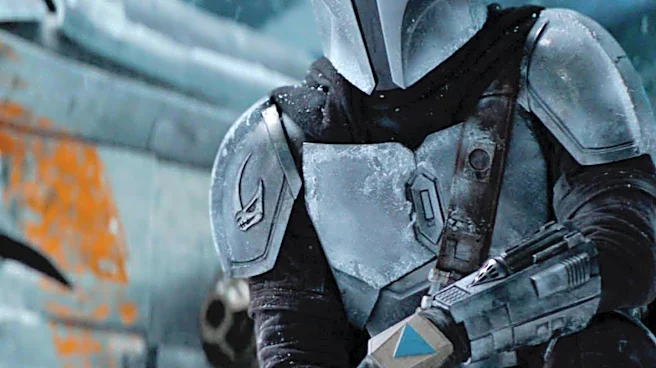
Beyond what the audience sees, miniatures serve a crucial function on set. They provide a tangible reference point for everyone involved in the production. For actors, reacting to a physical object—even a scaled-down one—is often far more effective than staring at a green screen and imagining a digital creation. It informs their eyeline and their performance. For cinematographers and directors, a miniature provides a real-world object to light and frame. This allows for creative discovery on the day of the shoot that can be stifled in a purely digital workflow. Productions like “The Mandalorian” have been praised for blending cutting-edge digital backdrops with physical props and miniatures, creating a seamless world. The Razor Crest ship, for instance, existed as both a detailed digital file and a real-world model, allowing filmmakers to study the physical object to perfect the lighting and texture of its digital counterpart.
The Surprising Economics of Small Scale
While it seems counterintuitive, building a detailed miniature can sometimes be more cost-effective than creating the same asset digitally. A photorealistic CGI environment, especially one that involves complex physics like a collapsing building or a massive tidal wave, can require immense processing power and thousands of hours from highly skilled digital artists. For certain shots, it can be cheaper and faster to build a model and destroy it on camera. This is particularly true for independent filmmakers, who leverage miniatures for everything from dream sequences to micro-budget explosions. But even on blockbuster productions, miniatures are used to establish a base of reality that is then augmented with CGI, rather than replaced by it. Films like “Blade Runner 2049” constructed vast, intricate cityscapes in miniature to serve as the photorealistic foundation for the film's world, which were then extended and populated with digital elements.
A Legacy of Award-Winning Craft
The continued relevance of miniatures is cemented by the industry's highest honors. The Creative Arts Emmys, which celebrate technical and artistic achievement, frequently recognize shows that masterfully blend practical and digital effects. While the specific category for visual effects doesn't separate miniatures from CGI, the winners and nominees often feature stunning model work. From the sprawling, detailed models of cities and castles in “Game of Thrones” to the unique aesthetic of Wes Anderson's films, which lean heavily into a crafted, handmade look, miniatures are a stylistic choice as much as a practical one. Audiences often perceive a certain charm in miniatures, an appreciation for the artistry involved, which stands in contrast to the sometimes sterile perfection of CGI. This enduring appeal ensures that the craft of model-making isn't just a historical footnote but a living, evolving part of modern visual storytelling.