





Horror with a Heart
To understand 'Monster House,' you first have to look at the names behind it: executive producers Steven Spielberg and Robert Zemeckis. Their involvement infuses the film with the spirit of 1980s Amblin Entertainment classics. Think 'The Goonies' meets
'Poltergeist.' The story is grounded in a familiar suburban reality where three kids—DJ, Chowder, and Jenny—stumble upon a supernatural threat that adults refuse to acknowledge. This framework creates a sense of adventure and camaraderie that balances the film's darker elements. It’s not just about surviving a monster; it's about kids rising to an impossible challenge. The film trusts its young audience to handle genuine peril, building suspense and stakes without resorting to cheap, bloody shocks. It’s a story with characters you care about, making the fear they experience feel earned and impactful.
When Home Is the Monster
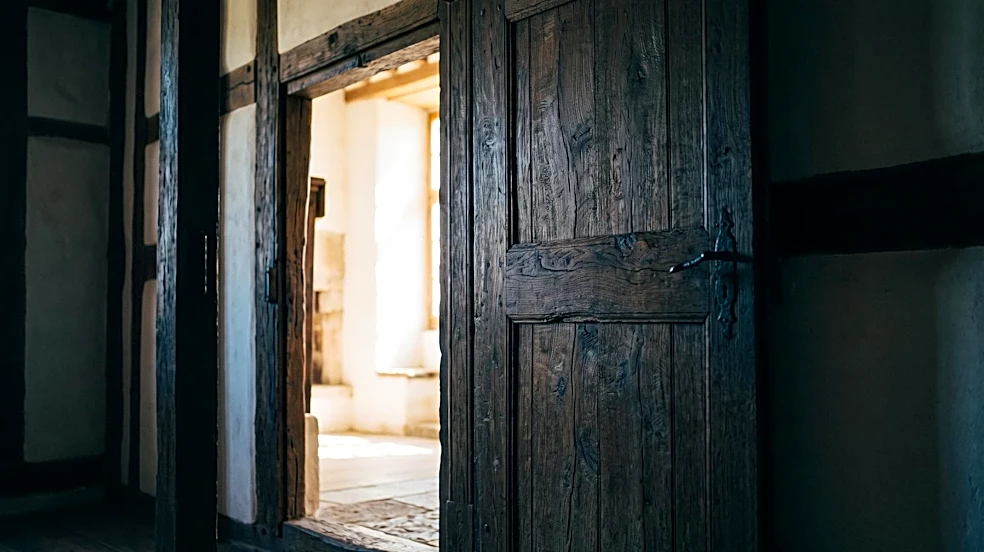
The true genius of 'Monster House' is its central concept: the horror isn’t a creature hiding in the shadows, but the house itself. The film brilliantly anthropomorphizes the dilapidated structure across the street, turning its windows into glaring eyes and its front door into a jagged-toothed maw. A misplaced tricycle or basketball isn't just lost; it's consumed. This taps into a primal, psychological fear—the corruption of the home, the one place meant to be a sanctuary. The movie uses this to create a constant, simmering dread. The threat is always visible, always present. Scares come from the house's floorboards creaking like a groaning stomach or its carpet unfurling like a predatory tongue, which is far more unsettling than a masked killer with a knife. The horror is built on atmosphere and imagination, proving that what you can imply is often scarier than what you explicitly show.
Animation That Feels a Little Too Real
Visually, 'Monster House' occupies a unique and unsettling space. Director Gil Kenan utilized performance-capture animation, the same technology Zemeckis used for 'The Polar Express'. This technique, where the movements of real actors are mapped onto digital characters, gives the film a strange, hyper-realistic quality. The human characters look almost like detailed, handcrafted puppets brought to life. This style intentionally dips into the 'uncanny valley'—the unsettling feeling we get from figures that are almost, but not quite, human. This subtle wrongness enhances the creepy atmosphere long before the house itself begins its rampage. It’s a visual choice that makes the entire world feel slightly off-kilter, contributing to the viewer's sense of unease without a single drop of blood being spilled.
A Monster with a Tragic Backstory
What elevates 'Monster House' from a simple creature feature to a memorable story is its emotional depth. The monster isn't just an evil entity; it's the vengeful spirit of Constance Nebbercracker, the tormented wife of the home's grumpy owner. Once a 'freak show' performer ridiculed for her size, Constance died tragically at the construction site of her future home. Her spirit fused with the house, her trauma manifesting as a violent, protective rage against anyone who comes near. This reveal transforms the narrative from a horror story into a tragedy. The goal is no longer just to destroy the monster, but to set a tormented spirit free. Providing the 'why' behind the haunting gives the film a surprising poignancy, inviting empathy for the villain and proving that the most compelling horror stories are rooted in human pain, not just monstrous violence.