



1. The Golden Generation's Last Gasp in 2006
The 2006 World Cup in Germany should have been the coronation. Portugal arrived with the last embers of its “Golden Generation”—Luís Figo and Pauleta—bolstered by a prime Deco and Ricardo Carvalho, and supercharged by a young, explosive Cristiano Ronaldo.
This was arguably their most balanced and formidable squad ever. They navigated a tough path to the semifinals, showcasing grit and flair. But the missed opportunity wasn't the 1-0 semifinal loss to a Zinedine Zidane-led France; it was the realization that this was the ceiling. It was their best shot with their best-ever generation of players, and they came up just short. The tournament established a painful precedent: even at their absolute best, something was missing. It was the moment the dream felt most real, making the subsequent years of frustration even sharper.
2. The Pragmatism That Became a Prison
Winning the 2016 European Championship under coach Fernando Santos should have been a launchpad. Instead, it became a tactical blueprint that grew into a prison. Santos’s disciplined, defensive, and often joyless pragmatism secured a historic trophy, but it was a style completely at odds with the wave of creative, attacking talent that emerged immediately after. For years, a squad boasting Bruno Fernandes, Bernardo Silva, João Félix, and Rafael Leão played a cautious, counter-attacking style that felt like driving a Ferrari in a school zone. The ultimate missed opportunity came in the 2022 World Cup quarterfinal against Morocco. Facing a defensive but beatable opponent, a star-studded Portugal looked tactically bankrupt and devoid of ideas, crashing out in a 1-0 loss that got Santos fired. He had taken them to the promised land once, but his refusal to evolve his style likely cost them a shot at an even bigger prize.
3. The Cristiano Ronaldo Conundrum
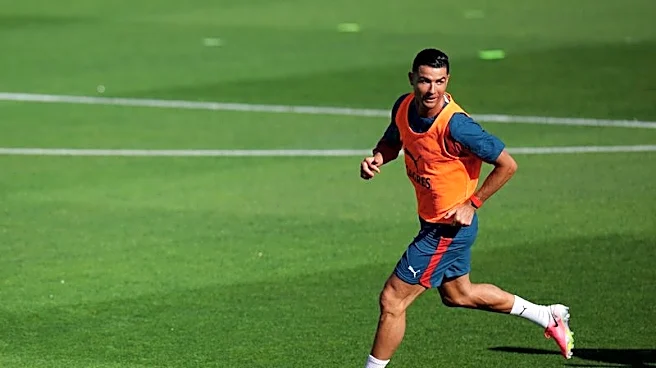
It feels blasphemous to call the greatest goal-scorer in history a 'missed opportunity,' but Portugal’s relationship with Cristiano Ronaldo in his later years became a tactical puzzle they couldn't solve. For over a decade, the team was built entirely around him, a strategy that brought immense success. But as he aged, his game changed. He became less of a dynamic winger and more of a penalty-box finisher. The team's structure, however, was slow to adapt. Opponents knew the entire attack flowed to one man, making Portugal predictable. The 2022 World Cup brought this to a head, with the drama around Santos benching Ronaldo dominating headlines. While his replacement, Gonçalo Ramos, scored a hat-trick in one game, the team was clearly unsettled. For years, they failed to build a system where Ronaldo was a devastating component rather than the entire engine, ultimately stifling the collective and creating a soap opera when unity was most needed.
4. The Total Implosion of 2014
While other World Cups were marked by tactical missteps or narrow defeats, the 2014 tournament in Brazil was a complete and utter disaster. It represents a missed opportunity in its purest form: a talented squad that failed to even show up. It began with a catastrophic 4-0 demolition by Germany, a match where star defender Pepe earned a foolish red card for a headbutt, perfectly encapsulating their loss of composure. With their confidence shattered and goal difference in tatters, they never recovered. A last-gasp draw against the United States and a hollow victory over Ghana saw them eliminated in the group stage. At the peak of Ronaldo’s powers and with a solid supporting cast, this team dramatically underperformed. It wasn't just a loss; it was a psychological collapse that suggested a deep-seated fragility on the biggest stage.
5. Failing to Integrate the Next Wave
For nearly a decade, pundits have marveled at the sheer depth of Portugal’s talent pool. From Bernardo Silva and João Cancelo to Bruno Fernandes, Rúben Dias, João Félix, and Rafael Leão, the country produced a seemingly endless conveyer belt of elite, technically gifted players. Yet, for much of that time, the national team has felt like less than the sum of its parts. Players who were transformative for their clubs often looked constrained or confused in a Portugal shirt. This points to a systemic failure to build a cohesive identity that could harness these individual talents. Whether due to tactical rigidity under Santos or an over-reliance on veteran players, the opportunity to blend these stars into a fluid, unstoppable attacking force was consistently missed. It’s the core of Portugal’s frustration: having all the right pieces but repeatedly failing to assemble them correctly.