






Imagine a 'Star Wars' movie without Jedi or 'Jaws' without a shark. In 1982, the 'Halloween' franchise did just that, releasing a sequel without its iconic villain, Michael Myers. It was a bold, creative gamble that asked a fascinating question.
An Idea Born from Exhaustion
By the
end of 'Halloween II' (1981), creators John Carpenter and Debra Hill felt the story of Michael Myers was complete. They had, quite literally, burned him to a crisp. Tired of the slasher formula they had helped perfect, they envisioned a different future for the franchise. Their grand plan was to transform 'Halloween' into an annual anthology series. The brand name wouldn't refer to a single story but to a collection of unrelated films, each exploring a different dark facet of the Halloween holiday. 'Halloween III: Season of the Witch' was to be the first test of this ambitious concept.
A New Kind of Corporate Horror
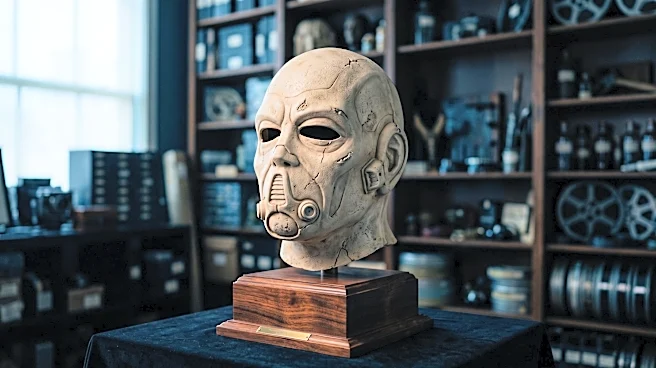
Directed by Tommy Lee Wallace, who had worked with Carpenter on the original, 'Season of the Witch' was a deliberate departure. It traded the familiar knife-wielding stalker for a paranoid conspiracy thriller steeped in sci-fi and ancient witchcraft. The story follows a doctor, played by Tom Atkins, who uncovers a sinister plot by the Silver Shamrock Novelties company. Its owner, Conal Cochran, plans to kill millions of children on Halloween night using a combination of pagan magic, a stolen piece of Stonehenge, and microchips embedded in the company's popular masks. The catchy television jingle, set to the tune of 'London Bridge Is Falling Down', acts as a hypnotic trigger for the mass sacrifice. It was a strange, cerebral, and deeply unsettling concept, a world away from the simple, terrifying purity of Michael Myers.
Selling a Sequel Without Its Star
The central problem was one of audience expectation. The film was called 'Halloween III', tying it directly to the two previous blockbusters. Marketing materials used the franchise branding, creating an implicit promise that the film itself would betray. Audiences in 1982, with no internet to clarify the film's premise beforehand, lined up expecting to see the return of The Shape. What they got was a story about killer masks, androids, and a bizarre Celtic plot. The backlash was immediate. Fans felt confused and cheated, and critics were largely unkind, with Roger Ebert famously dismissing it as a 'low rent thriller'.
A Disappointing Box Office Verdict
The commercial results sealed the fate of the anthology experiment. 'Halloween III' grossed $14.4 million at the domestic box office. While not a catastrophic flop on its $2.5 million budget, it was a steep decline from 'Halloween II', which had earned $25.5 million the year before. It was the lowest-grossing film in the series at the time, and the message to the producers was clear: the audience wanted Michael Myers. The grand anthology idea was dead on arrival. Six years later, the franchise would resurrect its star with 'Halloween 4: The Return of Michael Myers', and the series has focused on him ever since.
Vindication Through Time
The story of 'Season of the Witch' doesn't end with its initial failure. Over the ensuing decades, the film has undergone a radical critical and popular revaluation. Freed from the expectation of being a Michael Myers sequel, new generations of viewers have been able to appreciate the film on its own merits. Its unique blend of corporate satire, folk horror, and sci fi paranoia has earned it a passionate cult following. It is now often praised for its ambition, its eerie atmosphere, and its genuinely dark and cynical tone. What was once seen as the black sheep of the family is now celebrated as one of the most interesting and original horror films of the 1980s.