






It’s a Game, Simplified
Let’s be honest: for the casual American viewer, soccer can feel complicated. The continuous clock, the nuanced rules, the seemingly random ebbs and flows of possession can make it hard to grasp who has the upper hand. A penalty shootout wipes all that
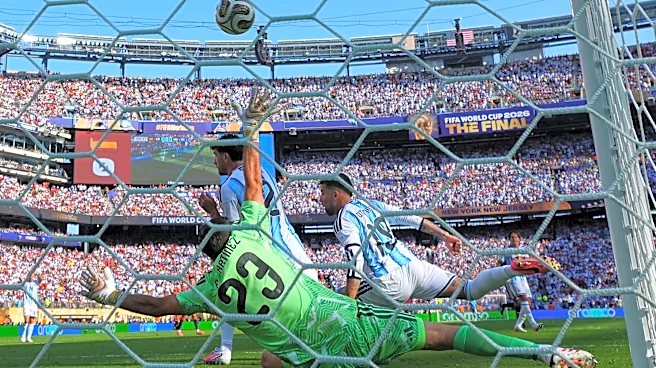
away. The objective becomes brutally simple: one player, one ball, one goalkeeper. Can the person kicking the ball put it in the net from 12 yards away? It’s a premise that requires no prior knowledge of the sport. It transforms a complex team game into a series of one-on-one duels, the most elemental form of sporting contest. After two hours of intricate play, the shootout offers a reset, inviting everyone in with a question so basic it’s universal: can you do the one thing you’re supposed to do?
Pure Psychological Warfare
The walk from the center circle to the penalty spot is often called the longest walk in sports, and for good reason. Each step is a mental battle. For the kicker, the goal, which seems enormous in open play, suddenly shrinks. The weight of millions of fans, teammates, and an entire nation’s hopes rests on their shoulders. Research shows that the success rate for penalties drops significantly during a shootout compared to one awarded in regular time, from around 85% to 76%, purely because of the psychological pressure. Goalkeepers engage in mind games, pointing, dancing on the line, or staring down the shooter to gain a mental edge. The kicker must overcome their own inner demons—the fear of missing, the desire to win, the cacophony of the stadium—and execute a simple task that has become monumentally difficult. It’s pure, uncut psychological theater.
Instant Heroes and Villains
Soccer, as a team sport, often has diffuse narratives. A win or loss is the result of 11 players’ collective effort. A shootout, however, creates instant, unforgettable characters. In a matter of seconds, a player becomes either a hero or a goat. Think of Roberto Baggio for Italy in the 1994 World Cup final, whose missed penalty is an iconic moment of heartbreak. Conversely, a goalkeeper who saves multiple shots becomes a national legend overnight. This narrative simplicity is incredibly powerful. You don't need to know a player's season stats or their preferred foot; you only need to see them in that single, isolated moment. The stakes are clear, the outcome is binary, and the emotional payoff—either elation or devastation—is immense and immediate.
A Definitive, If Cruel, Ending
Before the penalty shootout was formally adopted by FIFA in 1970, knockout matches that ended in a draw were often decided by a coin toss or the drawing of lots. This felt arbitrary and deeply unsatisfying. The shootout was introduced as a test of skill under pressure, a way to ensure the game was decided by the players, not by chance. While many purists argue it’s a cruel way to end a match, it provides something essential: finality. A soccer game can end in a draw, a concept that often feels anticlimactic in American sports culture, which is built around clear winners and losers. The shootout delivers an unambiguous conclusion. One team advances, the other goes home. It’s a brutal, sudden, and definitive end to the drama, which is precisely why it’s so hard to look away.
The Shared Rollercoaster
Ultimately, the appeal of the shootout is the shared emotional journey. For those few minutes, everyone is on the same page. The die-hard fan who has watched every minute and the person who just wandered into the room are both holding their breath. The tension is communal. Every successful kick is a shared explosion of relief and joy; every miss is a collective gasp of despair. Studies have even shown that how players celebrate after a successful kick—with big, emotional displays of energy—can psychologically impact the opposing team and increase their own team's chances of winning. It’s a powerful, collective experience that strips away the complexities of the sport and leaves only raw, universal emotion.