







The Pre-Kick Command Post
Before the ball is even placed on the corner arc, watch the keeper. A keeper in control isn’t passively waiting on their line; they are a general organizing their troops for a siege. Are they frantically pointing, or are their instructions clear and decisive?
A confident keeper uses these precious seconds to take a mental snapshot of the attackers’ positions and physically place defenders on the posts or on key runners. They are scanning, anticipating, and, most importantly, projecting an aura of command. If the defenders look organized and everyone knows their job, it’s because the keeper has established that control. If the box looks like a Black Friday doorbuster sale—every man for himself—the keeper has likely already lost the battle before it’s begun. This phase isn’t about athleticism; it’s about tactical intelligence and leadership made visible.
The Shout and the Stance
As the taker walks up to the ball, listen. The stadium is loud, but a commanding keeper can often be heard over the din. The best goalkeepers are incessantly vocal. They’ll shout “Keeper’s ball!” to claim ownership of the space, clearing out their own players and terrifying attackers. A silent keeper is an uncertain one, creating ambiguity that leads to hesitation from defenders and opportunity for strikers. Silence is a vacuum, and in the crowded penalty box, an opposing forehead will happily fill it. Next, look at their physical stance. Are they on their heels, flat-footed on the goal line? Or are they on the balls of their feet, in a coiled, aggressive starting position about three to four yards out, ready to spring in any direction? That forward starting position shortens the distance to the ball and allows them to attack it at its highest point, a crucial advantage. The stance reveals intent: a keeper on the line is prepared to react, while a keeper farther out is prepared to act.
The Moment of Decision
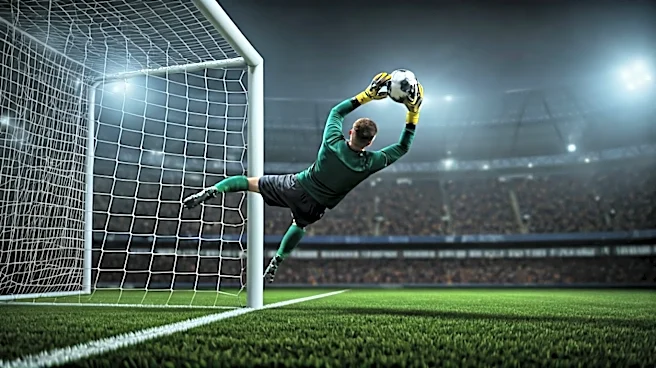
This is the heart of the matter. As the ball travels through the air, the keeper has a split second to solve a complex physics problem with three possible answers: come and catch, come and punch, or stay home. This decision separates the good from the great. A keeper in complete control makes this decision early and commits to it without a shred of doubt. Coming to catch is the highest-reward play; it ends the threat and can launch a counterattack. It’s also the highest-risk, requiring perfect timing, strong hands, and courage in traffic. Punching is the safer, more pragmatic choice—clear the danger, reset the defense. It’s a sign of a keeper who knows their limits and the game situation. Staying on the line is often seen as a passive choice, but in the case of a low, driven corner, it can be the correct one. The tell isn’t which choice they make, but the conviction with which they make it. Hesitation—a half-step forward followed by a panicked retreat—is the ultimate sign of a keeper who is not in control. That indecision is what forwards feast on.
The Aftermath and the Reset
A keeper's control doesn't end after they touch the ball. If they’ve caught it, how quickly do they turn defense into offense? A truly dominant keeper will immediately look up, seeking a quick throw or kick to an open winger to start a counterattack. They turn a moment of defensive peril into an offensive opportunity for their team, punishing the opposition for committing players forward. If they’ve punched the ball or it’s been cleared by a defender, their work still isn’t done. A controlled keeper is already reorganizing the defensive line for the second phase of the attack. They are shouting instructions, pushing their defenders up, and preparing for the next cross. They don't just save the ball; they manage the entire sequence of play. A keeper who just looks relieved that the ball went out for another corner, or who slowly gets back into position, is merely a participant. The one who is already directing the next five seconds of the game is a master.