






Sculpting a New Face
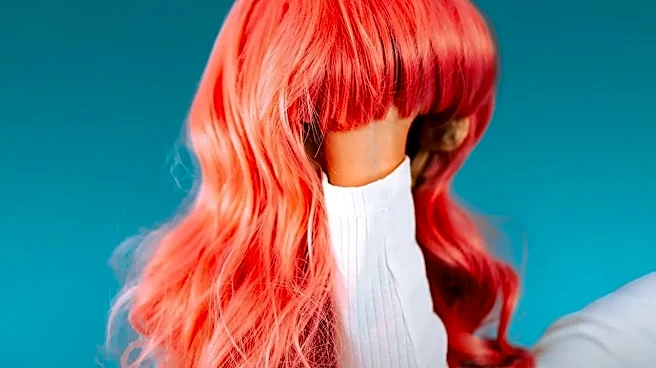
A wig’s first job is often architectural. According to celebrity wig makers, the placement of a hairline alone can dramatically alter an actor's perceived facial structure. A lower, flatter hairline can shorten a long forehead, creating a more grounded
or severe look. Conversely, a higher, rounded hairline can open up the face, suggesting innocence or youth. Volume is another key instrument; adding height at the crown elongates the face, while width at the sides can make a narrow face appear fuller. The process is so precise that for major roles, a custom mold of the actor’s head is created to build a 'hero wig' from scratch, ensuring a perfect fit that is undetectable even in high-definition. For the film 'Pam & Tommy,' actress Lily James wore a prosthetic forehead to replicate Pamela Anderson’s high hairline, demonstrating how hair and prosthetics work together to complete a physical transformation.
Turning Back (or Forward) the Clock
Depicting a character across several decades is one of filmmaking’s greatest challenges, and wigs are the primary solution. It’s a more nuanced art than simply adding gray. To age a character, a wig maker might use finer, more brittle hair textures or create a piece with subtle thinning at the crown. The style itself is also a powerful signifier. For 'The First Lady', wig makers created multiple pieces for Michelle Pfeiffer as Betty Ford, reflecting the changing styles and textures of her hair through different decades. In contrast, making an actor appear younger might involve a wig with more luster, a fuller density, and a softer hairline. This avoids the damage of constant dyeing and cutting an actor's real hair, a problem Keira Knightley has spoken about, which led her to use wigs for years. It guarantees consistency, which is crucial for productions that are shot out of sequence. Emilia Clarke’s iconic platinum blonde as Daenerys Targaryen in 'Game of Thrones' was a wig, ensuring her look remained identical across eight seasons.
A Tress Code for Class
Historically, hair has always been a powerful symbol of social standing, and film uses this visual shorthand to instantly communicate a character's position. Elaborate, powdered wigs in period dramas like 'Amadeus' or 'Mary Queen of Scots' immediately signal aristocracy and wealth, a tradition dating back to European courts. In these settings, the wig is part of the costume, a status symbol as potent as jewelry or fine clothing. A perfectly coiffed, immovable hairstyle can suggest a character who is wealthy, rigid, or powerful, while messy, unkempt hair often denotes a lower social standing or a rebellious spirit. The slicked-back, sinister blonde wig worn by Javier Bardem as the villain in 'Skyfall' adds to his unsettling, artificial persona. A character's journey can also be tracked through their hair; a shift from a messy bun to a sleek bob can represent a rise in power or a change in personal fortune.
The Actor's Secret Weapon
Beyond the visual impact for the audience, wigs are a critical tool for the actors themselves. Many performers, including Jamie Lee Curtis, have expressed fascination with how a wig can help them transform and find the character. Putting on a wig is often the final step in the physical transformation, a ritual that helps an actor shed their own identity and step into another. For Lily James, wearing the Pamela Anderson wig—along with dentures—helped her change her posture and speech. Similarly, for his many roles in 'The Nutty Professor,' Eddie Murphy relied on a variety of wigs to differentiate the characters not just for the audience, but for his own performance. By fundamentally changing how they see themselves in the mirror, a wig can unlock a new physicality, a different accent, and a deeper connection to the role they are playing.