
The Allure of the Lie
First, let’s define our terms. An unreliable narrator is a character who tells the story but whose credibility is compromised. They might be lying on purpose, mentally unstable, misremembering events,
or simply have a skewed perception of reality. Think of classic film examples like 'Fight Club' or 'Gone Girl', where the entire premise hinges on the narrator’s distorted version of the truth. We, the audience, are invited to piece together what really happened from the cracks in their story. The appeal is simple: it turns passive viewing into an active investigation. It’s a puzzle box, and there’s nothing more satisfying than feeling like you’ve solved it just before the big reveal.
The Prestige Adaptation Gets Twisty
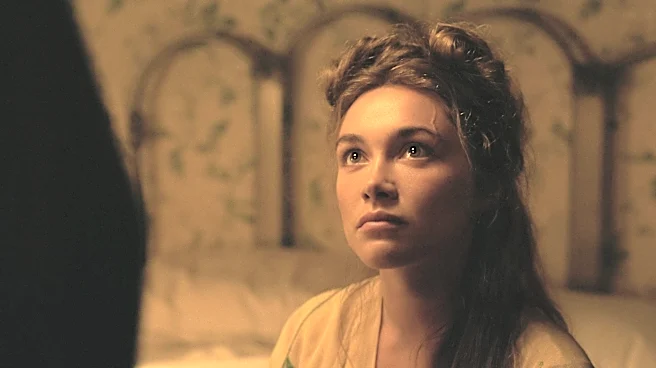
This month brings the Netflix adaptation of John Steinbeck's 'East of Eden', a seven-episode miniseries focusing on multiple generations of the Trask family in California. While the original novel is a sprawling epic, the new series zeroes in on one of literature's most compelling and controversial figures, Cathy Ames, played by Florence Pugh. In the book, Cathy is a character whose malevolence is presented through the eyes of others and a narrator who openly questions her humanity. The series gives this 'antihero' a more central voice, forcing viewers to constantly question the events surrounding her. Is she a born monster, a product of her environment, or is the story itself manipulating our perception of her? By centering a character whose very nature is a subject of debate, the showrunners are banking on viewers to lean into the ambiguity.
Small Town Secrets and Skewed Perspectives
Another new premiere, Apple TV+'s 'Nocturne', uses the unreliable narrator for a different flavor of psychological thriller. The series follows an ex-soldier turned homicide detective, played by Liev Schreiber, who moves his family to a small Pennsylvania town for a quieter life, only to find himself in a battle of wits with a brilliant serial killer. The setup sounds standard, but the show’s suspense comes from the detective's own fractured perspective. He’s a man whose past trauma clearly colors his judgment, leading viewers to wonder if the killer is as brilliant as he seems, or if our protagonist is projecting his own demons onto the case. When the person solving the mystery is himself an enigma, the line between hunter and hunted blurs, creating a potent cocktail of suspense and paranoia.
Why We Crave the Deception
So why is this trope having a moment, especially during the spooky season? Psychological thrillers are already dominating the streaming landscape. The unreliable narrator is the perfect device for this genre because it does more than just scare you—it makes you question your own judgment. It mirrors a modern anxiety about truth and perception. In an era of deepfakes and curated online personas, the idea that what we see can't be trusted feels deeply relevant. Furthermore, these characters are often complex and morally gray, reflecting a demand for more sophisticated storytelling than simple good-versus-evil tales. The narrator who lies to us, whether intentionally or not, is ultimately more interesting. They force us to engage, to question, and to pay attention to every single detail. They don't just tell us a story; they make us a part of it.