





Designing for the Void
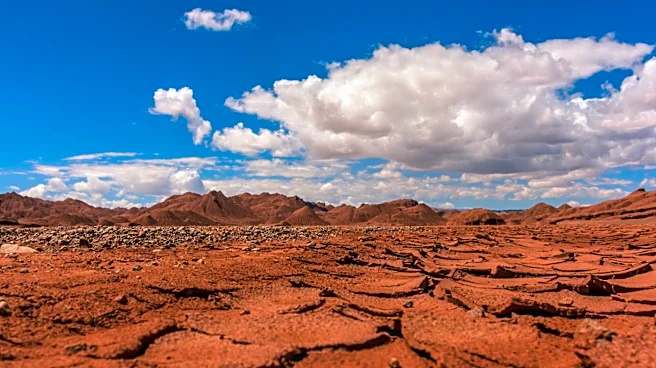
The first challenge any Burning Man builder faces is the canvas itself: a 1,000-square-mile, pancake-flat, alkaline lakebed known as the playa. This environment is a tabula rasa, a blank slate devoid of landmarks or context. Unlike a traditional stage
or gallery where the artist controls the viewing angle, art on the playa must command attention from every possible direction. An architectural designer noted that in the desert's expanse, you have to build big not for the sake of scale, but simply to make the art fit its environment where everything appears miniaturized. This forces a fundamental shift in thinking. There is no "back" of the sculpture, no place to hide wiring, structural supports, or imperfections. Every surface is a potential front, demanding that the piece be visually compelling and conceptually whole from a full 360 degrees. This spatial reality compels artists to create works that are not just objects in a landscape but are landscapes themselves, generating their own sense of place and gravity in an infinite sea of dust.
The Interactive Imperative
At Burning Man, the principle of "No Spectators" is baked into the culture. The audience is not a passive observer but an active participant, and the art is designed to be touched, climbed, and engaged with. This transforms 360-degree design from a purely visual concept into a tactile and structural one. Artists must plan for human interaction from the outset. Structures are often created as a series of modular blocks, like LEGOs, that can be assembled on-site without heavy machinery, anticipating the need for hands-on construction by a small team. This hands-on ethos means that platforms must support dynamic loads, surfaces must be safe to touch, and the entire piece must withstand the chaos of thousands of people interacting with it. The result is experiential art where the audience completes the piece, dissolving the boundary between creator and consumer. Installations become frameworks for human connection, whether it's a mirrored floor that reflects the sky and the people on it or a climbable sculpture that offers a new perspective on the city below.
Survival as a Design Principle
The Black Rock Desert is an unforgiving environment, with merciless sun, corrosive alkaline dust, and wind gusts that can exceed 50 mph. For builders, these are not inconveniences; they are core design parameters. Stagecraft here is as much about structural engineering as it is about aesthetics. Every piece must be robust enough to survive the week. For any structure over 10 feet tall, organizers may require architectural drawings, materials lists, and detailed calculations for wind loads and anchoring capacity. The Department of Public Works provides 4-foot-long steel ground anchors, each with a design capacity of 3,000 pounds, to help secure larger pieces against the powerful desert winds. This focus on durability forces a level of ingenuity and practicality not always seen in the gallery world. Materials must be chosen for their resilience, and construction methods must be both sturdy and achievable in a remote location with no access to a hardware store. The art must endure before it can inspire.
The Fourth Dimension: Day, Night, and Fire
A 360-degree audience also exists in a 24-hour cycle, and Burning Man stagecraft treats light as a primary medium. An installation must work in the harsh glare of the midday sun and in the profound darkness of the desert night. Many pieces are effectively two different works of art. By day, they are physical sculptures, their form, texture, and shadow interacting with the natural light. But as the sun sets, they transform. Artists integrate LEDs, projection mapping, and fire to create entirely new experiences. Light effects are often interactive, allowing participants to change the color or pattern of a piece, deepening the sense of engagement. Fire itself is a celebrated and deeply symbolic medium, used in everything from intimate, controlled sculptures to the spectacular burns of major installations like the Man and the Temple. This mastery of light and its absence ensures the 360-degree experience is also a 24/7 one, constantly evolving and revealing new facets over time.