




1. They Are Mobile Stages
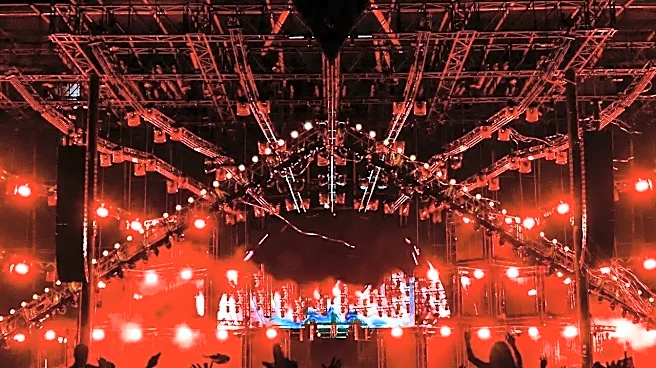
Many mutant vehicles are not just cars but fully equipped performance venues. Complete with DJ booths, professional-grade sound systems, and lighting rigs, these vehicles become roving concert stages, bringing music and energy to every corner of the vast
desert playa. A ride on an art car can instantly turn into front-row seats for a surprise set.
2. They Function as Kinetic Sculptures
The core rule for a mutant vehicle is that it must show little to no resemblance to its original form. This pushes creators to think like sculptors, resulting in massive, moving artworks. Imagine a 40-foot-long Cadillac transformed into a sleek rocket car or a giant metal octopus that moves its tentacles, and you begin to understand their sculptural ambition.
3. They Incorporate Fire as a Medium
Fire isn't just an accessory; it's a core artistic element for many art cars. These creations, often called Flame Effects Vehicles, use controlled bursts of fire for dramatic, percussive effect. Fire-breathing dragons or octopuses that shoot flames in time with music aren't just vehicles; they are dynamic, and slightly dangerous, theatrical events.
4. They Create Immersive Environments
Some of the most ambitious art cars are entire, self-contained worlds. A vehicle might be transformed into a 19th-century saloon, a deep-sea submarine, or a whimsical, furry bunny. The goal isn't just to look like something else but to provide a fully immersive experience you can step into, leaving the desert behind for a moment.
5. They Are Interactive Public Spaces
Unlike traditional art, most mutant vehicles are meant to be touched, climbed on, and ridden. They are designed as public transportation and communal gathering spots. A ride is a gift, and hopping aboard a passing car to meet new people and see the playa from a new perspective is a fundamental part of the Burning Man experience.
6. They Tell a Narrative Story
Many cars have a theme or a story they are trying to tell. A vehicle might be inspired by a literary classic like Twenty Thousand Leagues Under the Sea or a historical concept like the Wild West. These aren't just random designs; they are mobile narratives that add to the thematic richness of the event.
7. They Radically Alter Scale
A common artistic choice is to play with scale in a surreal way. You might see a giant, rideable rubber duck or an enormous raccoon prowling the desert floor. By taking everyday objects or animals and blowing them up to vehicle-size, creators turn the familiar into the fantastical, challenging our perception of the world around us.
8. They Are Platforms for Radical Self-Expression
At its heart, Burning Man is about self-expression, and art cars are one of the most visible forms this takes. Each car is a labor of love, representing the passions, dreams, and sometimes eccentricities of its builders. They are rolling testaments to individual and collective creativity, built not for profit but for the joy of creation itself.
9. They Transform with Light at Night
A mutant vehicle must be as visually interesting at night as it is during the day, a requirement known as “radical illumination.” This leads to spectacular displays of LEDs, lasers, and projections that turn the cars into glowing, otherworldly apparitions after sunset. A daytime sculpture becomes a beacon of light, completely changing its character.
10. They Place Art Out of Context
Part of the official definition of a mutant vehicle is that it can be an object that is out of context from its normal setting. A Spanish galleon or a Victorian house navigating a dusty desert is the perfect example. This deliberate dislocation is pure stagecraft, using the incongruity of the image to create a sense of wonder and surrealism.
11. They Serve as Mobile Viewing Platforms
During the week's major events, like the burning of the Man, art cars arrange themselves in a massive circle, forming a temporary amphitheater. Their upper decks become the best seats in the house, transforming them from individual artworks into a collective piece of infrastructure for a massive communal ritual.
12. They Become Part of a Living System
No single art car exists in a vacuum. Together, they form a dynamic, interactive system that defines the visual and social landscape of Black Rock City. They are the circulatory system of the event, moving people, music, and art across the desert in a constantly shifting, collaborative performance. The art isn't just the car; it's the car in motion, interacting with thousands of people.