





More Than a Holiday Special
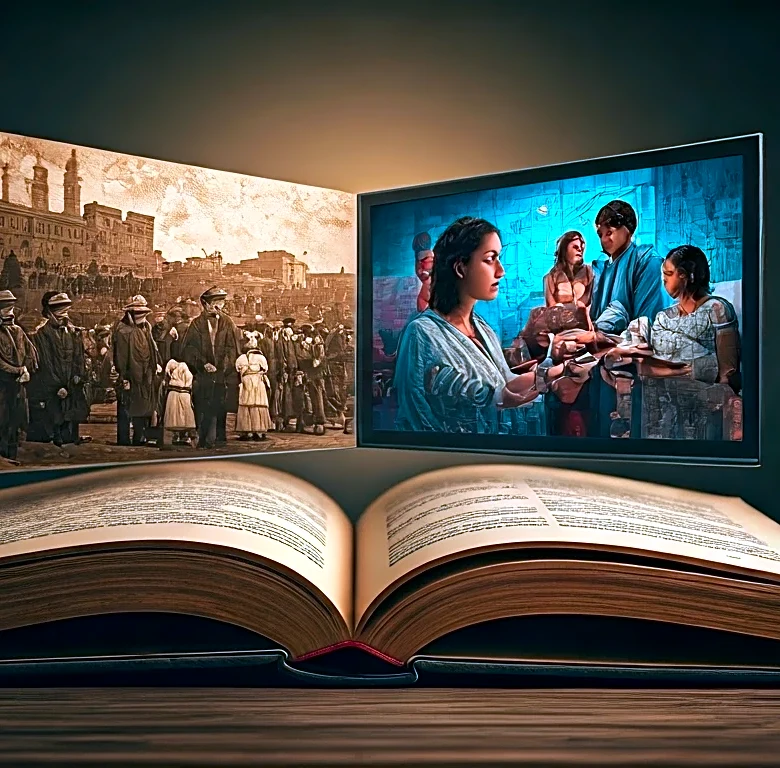
When Juneteenth became a federal holiday in 2021, it cemented a new fixture in the American cultural calendar. With it came an annual wave of television programming: historical documentaries, celebratory concerts, and news specials dedicated to explaining
the holiday’s origins. These are valuable and necessary, providing crucial context for a chapter of American history that was, for too long, relegated to the sidelines. But they also face a recurring problem for any historical programming: how do you engage an audience that may feel it already knows the basic story? How do you move past the recitation of facts into a deeper, more emotional understanding? The answer might lie not in history textbooks, but in the playbook of shows like *Knives Out* or *Only Murders in the Building*.
The Engine of a Good Mystery
At its core, a mystery isn’t just about a crime. It’s a narrative structure built around a central, compelling question. It starts with an event that doesn't make sense—a locked-room murder, a missing person, a baffling delay—and then methodically guides the audience on a journey of discovery. Information is revealed piece by piece. Each clue, each interview, each red herring deepens the intrigue and forces the viewer to actively participate, to connect the dots and try to solve the puzzle themselves. The structure is inherently active. It pulls you forward, promising not just an answer, but a satisfying reordering of the facts into a coherent, meaningful story. It transforms passive viewing into active investigation.
The Central Question of Juneteenth
The story of Juneteenth contains its own powerful, built-in mystery. We all know the headline: the Emancipation Proclamation was issued in 1863, but enslaved people in Galveston, Texas, didn’t receive the news until June 19, 1865, more than two years later. The typical documentary presents this as a tragic fact. But framed as a mystery, it becomes a gripping central question: *Why?* Why did it take 29 months for the news of freedom to travel? This isn't a rhetorical question; it’s a historical investigation waiting to happen. It reframes the narrative from a passive statement of fact (“the news was late”) to an active, urgent inquiry (“let’s find out what held up the news of freedom”). This approach doesn’t invent a mystery; it illuminates the one that has been hiding in plain sight.
Uncovering the Historical Clues
A TV special structured this way would treat historical facts as clues in an investigation. The “detectives”—historians, scholars, and descendants—would guide us. One clue might be the slow pace of 19th-century communication and the isolation of Texas from the main theaters of the Civil War. Another would be the deliberate, criminal suppression of the information by plantation owners who wanted to squeeze one more harvest out of their unpaid workforce. We would investigate the motivations of these enslavers, not as cartoon villains, but as economic actors making calculated, inhumane decisions. We’d follow the movements of the Union army and explore why federal authority was slow to establish itself in the state. Each piece of information wouldn’t just be a dry fact; it would be a piece of the puzzle, a step closer to understanding the complex web of power, greed, and logistics that created the delay.
The Reveal Is Deeper Understanding
In this kind of program, the “big reveal” at the end isn’t a single, shocking twist. The payoff is the profound understanding of *why* Juneteenth is not just a story about delayed news, but a story about the fierce, stubborn resistance of the institution of slavery. The reveal is that freedom isn't a switch that gets flipped, but a contested state that must be claimed, enforced, and defended. The audience wouldn’t just learn *that* Major General Gordon Granger issued General Order No. 3. They would feel the weight and meaning of that order in a visceral way, having journeyed through the very forces that made it so necessary and so late. It makes the history personal and the stakes immediate.