



Redefining ‘Negative Space’
In art and design, negative space is the area around and between the subjects of an image. It’s the background, the void, the quiet that gives the main subject its shape and power. In fashion, this concept has evolved beyond the obvious. It’s no longer
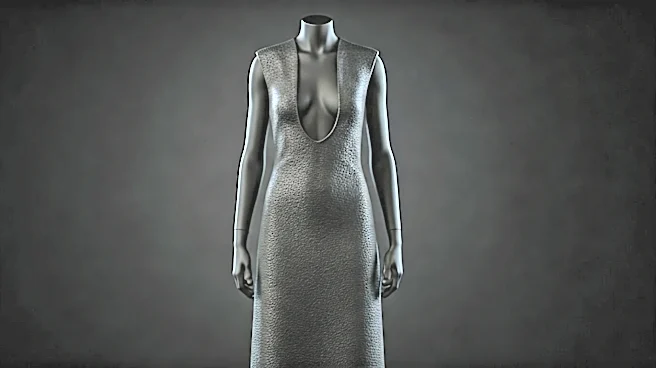
just about a cheeky cutout at the waist or a plunging neckline. Today’s use of negative space is more architectural and intellectual. It’s the sliver of skin revealed by a perfectly draped fabric, the unexpected void created by an asymmetric hemline, or the clean line of a backless dress that draws all the attention without a single embellishment. It’s a deliberate choice to use absence as a design element, turning the wearer’s own form into part of the composition. This isn't about exposure for shock value; it's about composition, confidence, and a masterful understanding of silhouette.
The Tribeca Approach
Unlike the sartorial peacocking of the Met Gala or the old-school glamour of the Oscars, Tribeca’s red carpet has always cultivated a cooler, more downtown aesthetic. It’s where actors, directors, and artists converge, and their style reflects a certain creative-class nonchalance. This makes it the perfect breeding ground for the negative space trend. We see it in the way a simple black column gown is made unforgettable by a single, razor-sharp cutout along the torso, as seen on stars like Christy Turlington. Or in the choice of a seemingly simple dress that reveals a completely open back, transforming a modest front into a dramatic exit. It's apparent in sheer panels that hint at form without revealing everything, or in minimalist two-piece sets where the gap between top and bottom becomes the focal point. These aren't loud outfits; they command attention through their quiet, confident construction.
The Luxury of Restraint
So why does this feel so luxurious? Because in an era of maximalist aesthetics—endless logos, loud prints, and algorithm-driven trends—restraint is the ultimate flex. An outfit saturated with sequins and feathers is shouting for attention. A garment that relies on a single, perfectly executed void is whispering. That whisper implies a deep level of confidence, both from the designer and the wearer. It takes far more technical skill to design a dress where the structure depends on a single point of contact or a precisely angled cut, than it does to cover a surface in crystals. The luxury isn't in the material cost but in the intellectual capital: the design prowess, the tailoring expertise, and the wearer’s self-assurance to pull it off. It suggests that you don't need to be covered in brand identifiers to be valuable; your presence is enough.
A Statement on Modern Style
Ultimately, the rise of negative space as a luxury detail is a reaction against visual noise. It’s a palate cleanser. In a world where we are constantly bombarded with information and imagery, an outfit that offers a moment of visual quiet feels both refreshing and powerful. It forces you to look closer and appreciate the subtlety. This trend strips away the superfluous and focuses on what is essential: form, silhouette, and the person inhabiting the clothes. It’s less about the dress itself and more about how the dress frames the wearer. By treating the space around the body with as much importance as the fabric covering it, designers at events like Tribeca are making a sophisticated argument that true style isn't about adding more, but about knowing exactly what to leave out.