
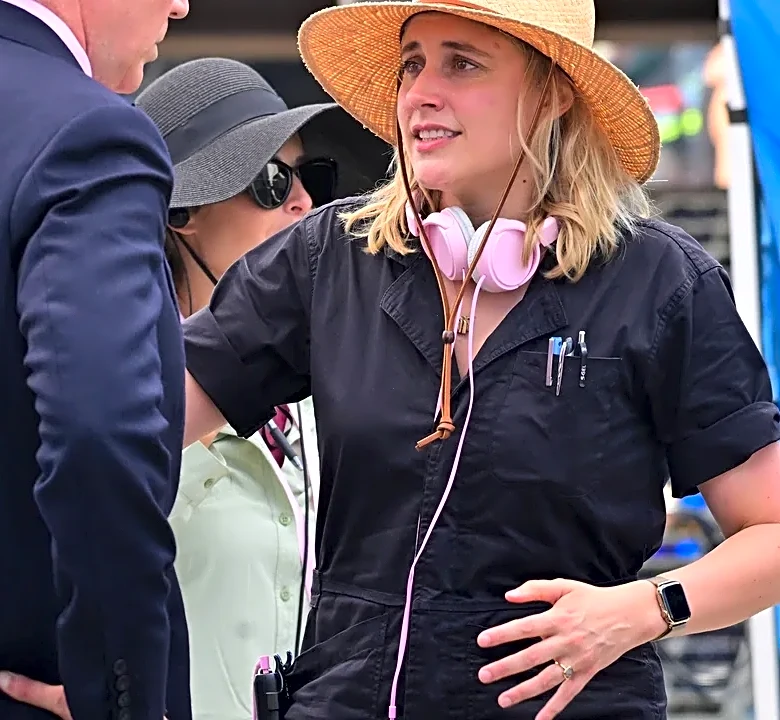





With Greta Gerwig set to direct a new adaptation of 'The Chronicles of Narnia' for Netflix, the pressure is on to create a world that feels both magical and real. So, how would a visual effects master like Paul Franklin tackle the task?
The Challenge of a Modern Fantasyland
Bringing Narnia
to the screen in the late 2020s is a fundamentally different challenge than it was twenty, or even ten, years ago. Audiences, raised on the photorealistic dragons of 'Game of Thrones' and the seamless alien worlds of 'Avatar', have an incredibly sophisticated visual palate. The task is no longer simply to make a lion talk; it’s to make you believe that lion has a soul. It’s not just about building a castle of ice, but making you feel the chill. The central challenge for any VFX team tackling Narnia is to honor the whimsical, storybook quality of C.S. Lewis’s novels while delivering the kind of immersive, believable world modern blockbusters demand. Anything less risks feeling quaint or, worse, fake. The project requires a visionary who can blend the painterly with the photorealistic, creating magic that feels grounded and emotionally resonant.
The Paul Franklin Philosophy
Enter Paul Franklin, the two-time Oscar-winning VFX supervisor behind Christopher Nolan’s most mind-bending films. If there’s one thing that defines Franklin’s work on movies like 'Inception' and 'Interstellar', it’s a deep-seated belief in tangible reality. He is a master of 'in-camera' effects, preferring to build physical rigs and capture real phenomena whenever possible, using CGI to augment rather than create from scratch. Think of the rotating hallway fight in 'Inception'—that was a real, spinning set, not just digital trickery. Remember the vast cornfields and the dust-choked apocalypse of 'Interstellar'? Much of that was physically created. This philosophy could be revolutionary for a project like Narnia. Instead of a world built entirely inside a computer, Franklin’s approach would likely involve creating as much of Narnia as possible for real. This emphasis on the practical would give the actors a tangible world to perform in and lend the film a weight and texture that pure CGI often struggles to replicate.
Imagining Narnia's Key Moments
Applying Franklin’s methodology to Narnia’s most iconic moments is a fascinating thought experiment. How would he create the journey through the wardrobe? One can imagine a physical, elongated set, using forced perspective and clever lighting to create the disorienting transition from wood and fur coats to snow-dusted pine trees, all captured in a single, seamless shot. What about the White Witch’s castle? It would likely be a combination of a massive, tangibly built lower level and digital set extensions for impossible height and scale. But the ultimate test would be Aslan. The temptation is to create a fully digital lion, but Franklin’s history suggests he might push for more. Perhaps he would employ advanced animatronics for close-ups, capturing the real-world physics of muscle and fur, and blending that with digital animation for more complex movements. The goal would be to create a character that feels like a divine presence, not just a beautifully rendered digital animal. It's about conveying weight, wisdom, and power through visual craft.
The Gerwig Factor and Character-First VFX
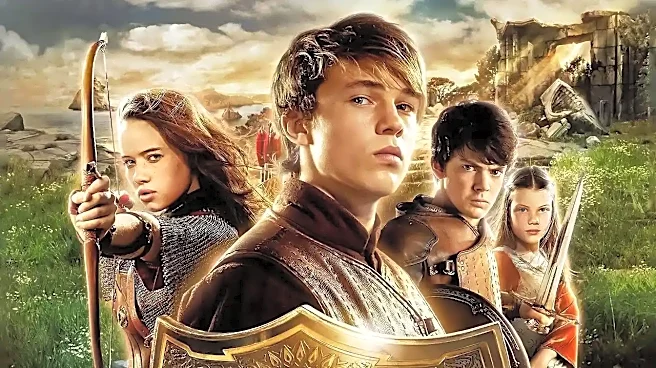
The potential pairing of Franklin’s technical mastery with Greta Gerwig’s distinct directorial vision is perhaps the most exciting element. Gerwig’s films, like 'Lady Bird' and 'Little Women', are celebrated for their deep focus on character, performance, and emotional nuance. She isn’t a director known for empty spectacle. For a collaboration to work, the visual effects would have to be in complete service of her character-driven storytelling. This suggests a Narnia where the magic illuminates the Pevensie children’s inner journeys. The wonder of the lamppost in the snow wouldn’t just be a pretty picture; it would reflect Lucy’s own sense of isolated awe. Aslan’s majesty wouldn’t just be about spectacle; it would be about inspiring genuine reverence and fear in the characters. Franklin’s practical approach is perfectly suited for this, as it grounds the fantasy, making it a believable backdrop for real human emotion rather than a digital cartoon that risks overshadowing the actors.