






The Post-War Miracle
The origin story of German footballing identity begins not with dominance, but with a miracle. In 1954, a West German team of semi-professionals faced Hungary’s “Magical Magyars,” arguably the greatest team on the planet, in the World Cup final. Hungary had
thrashed them 8-3 earlier in the tournament. Yet, in a rain-soaked final in Bern, Switzerland, the Germans clawed their way back from a 2-0 deficit to win 3-2. The “Miracle of Bern” was more than a soccer victory; it was a foundational moment for a post-war nation desperate for a positive identity. The win wasn't about flair or artistry. It was about grit, discipline, and an unbreakable collective will—virtues that would become the bedrock of the team for decades to come. The message was clear: Germany could triumph through sheer determination.
Pragmatism Over Poetry
If 1954 was the foundation, 1974 was the blueprint for 'efficiency.' The World Cup final pitted West Germany against the Netherlands and their revolutionary “Total Football.” Led by the ethereal Johan Cruyff, the Dutch were the darlings of the tournament, a symphony of movement and creativity. The Germans, led by the pragmatic Franz Beckenbauer and the ultimate poacher, Gerd Müller, were the counterpoint. They were organized, disciplined, and brutally clinical. After going down 1-0 early, they didn't panic. They stuck to their game plan, equalized with a penalty, and let Müller do what he did best: score the unglamorous, decisive goal. The 2-1 victory was a triumph of pragmatism over romance. It cemented the idea that while others played beautiful soccer, Germany played winning soccer.
The Unflinching 'Villain' Era
By the 1980s, the world’s respect for German efficiency began to curdle into resentment. The team’s reputation for being physically imposing and mentally unshakeable took on a darker, more cynical edge. The defining moment came in the 1982 World Cup semi-final against France. Goalkeeper Harald Schumacher’s infamous, unpunished collision that left French player Patrick Battiston unconscious became a symbol of a win-at-all-costs mentality. Germany won that game, and they would go on to win the 1990 World Cup with a team renowned more for its physical power and mental fortitude than its technical skill. This was the peak of the “Die Mannschaft” stereotype: a team you respected, feared, but rarely loved. They were the inevitable, unstoppable force that ground opponents down.
Das Reboot: A Deliberate Revolution
By the turn of the millennium, the formula had grown stale. German football was dismissed as “Rumpelfußball” (rumble-football)—outdated, slow, and predictable. Humiliating exits at Euro 2000 and 2004 forced a moment of national reckoning. The German Football Association (DFB) realized that efficiency alone was no longer enough. In a profoundly un-stereotypical move, they tore up the old blueprint and launched “Das Reboot.” They invested hundreds of millions into a nationwide system of youth academies, prioritizing technical skill, creativity, and fast-paced, attacking play. The goal was to build a new identity—one that fused traditional German organization with modern, international flair. The revolution was led by Jürgen Klinsmann and his assistant, Joachim Löw, who brought a new philosophy of dynamic, positive soccer.
The Perfect Synthesis of 2014
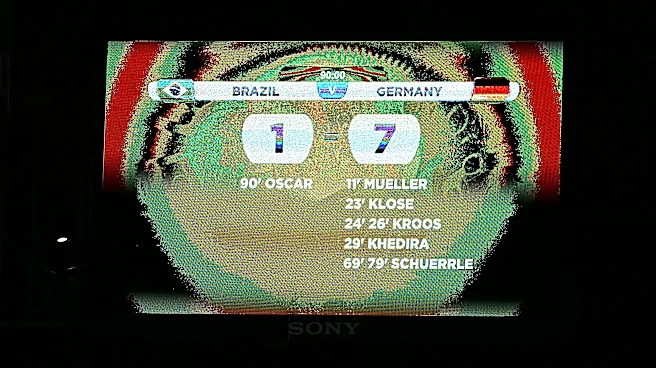
The reboot reached its glorious conclusion at the 2014 World Cup in Brazil. Löw’s team was the perfect synthesis of old and new Germany. It had the traditional organization, mental strength, and defensive solidity. But it also had the technical brilliance of players like Mesut Özil, the creativity of Toni Kroos, and the attacking dynamism of Thomas Müller. This blend was never more apparent than in the semi-final: a stunning 7-1 demolition of the host nation, Brazil. It was the ultimate expression of ruthless efficiency, but this time delivered with breathtaking style and skill. The final victory over Argentina was a return to the old ways—a tough, gritty 1-0 win—proving that Germany now had the ability to win any type of game. They had finally married efficiency with elegance.