








The Loneliest Walk in Sports
It starts with the walk. That 40-yard journey from the halfway line to the penalty spot is often described by players as the most isolating experience in their careers. The goal, which normally looks huge, suddenly appears to shrink, flanked by a goalkeeper
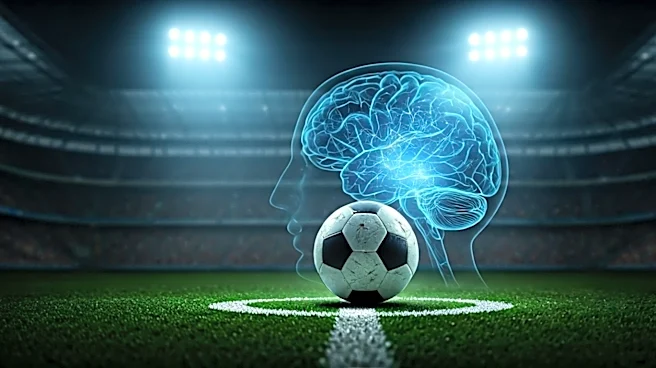
who seems impossibly large. This is the first psychological hurdle. The player’s brain is flooded with stress hormones like cortisol and adrenaline. Their heart rate skyrockets, breathing becomes shallow, and thoughts race. The consequences of the moment—heroism or failure, the cheers or the silence—are overwhelming. Sports psychologists call this “attentional narrowing,” where the immense pressure causes a player’s focus to fixate on the threat (the keeper, the fear of missing) rather than the task (kicking the ball into the net). The first battle is simply to control the body’s fight-or-flight response and keep breathing.
The Power of a Pre-Shot Routine
To combat the chaos, elite players rely on a meticulously practiced pre-shot routine. Watch closely the next time you see a penalty. You'll notice a sequence of deliberate actions: the way they place the ball, the number of steps they take back, a deep exhale, a glance at the goal, a final look at the ball. This isn't superstition; it's a powerful psychological tool. This routine acts as a mental anchor, a familiar process in an unfamiliar, high-stakes environment. By focusing on these small, controllable actions, the player shifts their attention away from the outcome and back to the process. It's a way to quiet the “noise” in their head and trigger the thousands of hours of muscle memory they’ve built on the training ground. The routine tells the brain, “I’ve done this before. I know what to do.”
Goalkeeper-Dependent vs. Goalkeeper-Independent
Once the player is at the spot, a crucial decision is made. Broadly, kickers fall into two camps. The first is “goalkeeper-independent.” These players pick a spot before they even begin their run-up and commit to it, no matter what. Their philosophy is simple: if you strike the ball with enough pace and accuracy into a corner, the goalkeeper can’t save it even if they guess correctly. This strategy minimizes in-the-moment decision-making and relies purely on execution. The second camp is “goalkeeper-dependent.” These players watch the keeper for the slightest tell—a lean, a shift in weight—and react, aiming for the opposite side. This is a high-risk, high-reward mental chess match that requires incredible composure. A slight hesitation or a clever bluff from the keeper can lead to disaster. Goalkeepers, meanwhile, are doing everything they can to disrupt this process, from trash talk to pointing and dancing on the line.
The Final Second: Clearing the Mind
In the final moment before the run-up, the goal is mental clarity. The player has fought the initial panic, completed their routine, and chosen their strategy. Now, they must empty their mind of everything but the target. Former players often talk about focusing on a specific spot on the ball where they want their foot to connect, or a patch of netting they want to hit. Any lingering doubt or last-second change of mind is often what leads to a miss. Researchers have a term for this: “reinvestment,” or consciously trying to control an automated skill, which disrupts the natural flow. The skied penalty from a panicked player who leans back is a classic example. The best penalty takers, in that final second, aren’t thinking at all. They are simply executing a skill they have honed into an instinct.