
An Economic Engine Disguised as a Festival
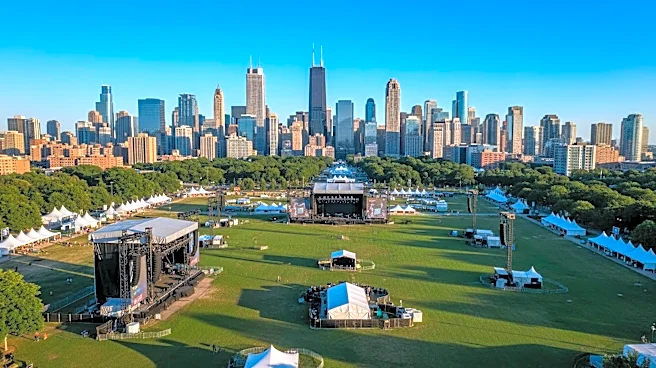
For four days, hundreds of thousands of fans descend on downtown Chicago, but the festival's real impact is measured in dollars, jobs, and global reputation. Lollapalooza has become a cornerstone of Chicago's
summer tourism strategy, a reliable force that fills hotels, restaurants, and public transit. In 2025 alone, the festival was reported to have generated a staggering $480 million for Chicago's economy, an increase of $40 million from the previous year. This figure, provided by festival organizers C3 Presents, paints a picture of an event that has evolved from a traveling rock show into a permanent and lucrative fixture for its host city. Since organizers began tracking its impact in 2010, the festival has poured billions into the local economy, proving that culture is also big business.
The Direct Dollars and Cents
The financial benefits for Chicago are direct and substantial. A key part of the city's long-term agreement with C3 Presents, which keeps the festival in Grant Park through at least 2032, is a revenue-sharing model. In 2025, this deal resulted in a direct payment of over $10 million in rent to the Chicago Park District, funds that support parks citywide. Additionally, the city collected an estimated $7.26 million in amusement taxes from the event. This guaranteed income is a major reason city officials view the partnership as essential. For Chicago, it's not just about the prestige; it's about predictable, significant revenue that supports public services and infrastructure, including specific commitments to fund renovations at the Grant Park tennis courts and support Chicago Public Schools.
The Ripple Effect on Chicago's Brand
Beyond the balance sheets, Lollapalooza provides an immeasurable boost to Chicago’s global brand. The festival attracts a massive influx of visitors—in 2025, attendance was around 115,000 people per day, with more than half traveling from outside the city. These tourists don't just stay within the festival grounds. They fill hotel rooms, with occupancy and room rates seeing a significant spike during the festival week. Data from 2025 shows these visitors tend to be more affluent than typical summer tourists, with a higher median household income. This influx of spending power benefits a wide range of businesses, from high-end restaurants and nightclubs to cannabis dispensaries, which report a surge in customers. The festival helps solidify Chicago’s reputation as a world-class cultural destination, a perception that has lasting value well beyond one weekend.
The Cost of the Footprint
Of course, hosting a temporary city of over 100,000 people daily comes with costs. The physical footprint on Grant Park is significant, requiring extensive and expensive restoration work after the stages come down and the crowds disperse. The logistics of security, sanitation, and street closures also represent a major undertaking for the city. While downtown businesses often thrive, the economic benefits aren't always felt evenly across all 77 of Chicago's neighborhoods. Some local businesses, particularly those not oriented toward the festival's party atmosphere, report normal or even slower-than-usual business. The debate continues over whether the immense profits for a private promoter and the concentrated economic boom in the Loop are worth the public park closures and disruption for residents. However, with a guaranteed minimum payment to the Park District even if the festival were canceled, the city has insulated itself financially from some of the risk.