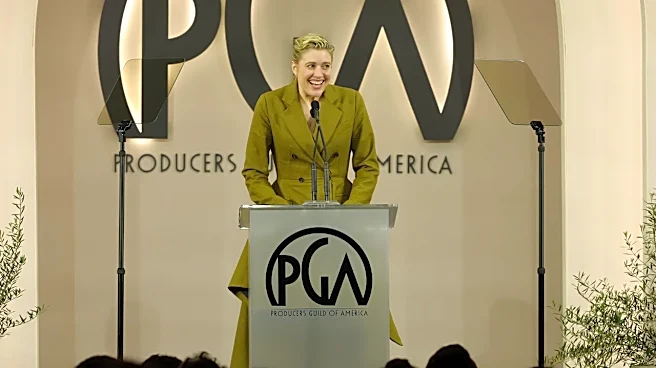





Fresh off her record-shattering success with 'Barbie,' Greta Gerwig is Hollywood’s golden director, able to do anything. So what's her next move? A journey into Narnia. But this isn't just another fantasy franchise; it's a profound test.
An Auteur of the Human Heart
To understand
the challenge, you have to understand Gerwig’s filmmaking DNA. From 'Lady Bird' to 'Little Women,' her work is grounded in the messy, beautiful, and deeply human. Her characters are strivers and dreamers, wrestling with identity, ambition, and the complicated love of family. They talk over each other in realistically frantic dialogue, their coming-of-age stories feeling both specific and universal. Even 'Barbie,' a fantasy comedy about a doll, became a heartfelt exploration of what it means to be a real, feeling person. Gerwig’s central question is always about humanity—how we find ourselves, connect with others, and make our own meaning in a world that often feels chaotic. Her focus is on the intricate interior lives of her characters, particularly young women, navigating their place in the world.
Not Just Another Fantasy World
Narnia, however, is built on a completely different foundation. C.S. Lewis’s seven-book series isn't just a tale of talking animals and magical wardrobes; it’s one of the 20th century's most famous works of Christian literature. While Lewis himself preferred the term 'supposal' over 'allegory'—imagining what Christ might be like in another world—the parallels are direct and intentional. Aslan the lion is not merely a powerful creature; he is a Christ figure who sacrifices himself and is resurrected. The world of Narnia is one where good and evil are explicit, and its soul is tied directly to a divine creator. This stands in stark contrast to the secular humanism that quietly fuels Gerwig's most beloved films.
The 'Magician's Nephew' Conundrum
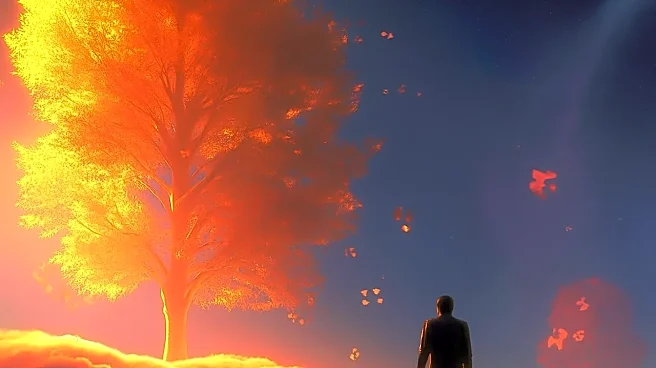
This central tension comes into sharpest focus with Netflix’s plan for Gerwig to adapt 'The Magician's Nephew.' This book is Narnia's Genesis, detailing Aslan singing the world into existence from a void of darkness. It's a moment of pure, unabashed creationism—a literal divine act presented without irony or subversion. How does a director known for her grounded, hyper-realist dialogue and focus on human agency tackle a scene where the protagonist is not a person finding their way, but a god-like being creating life itself through song? The scene’s power lies in its sincere depiction of cosmic, top-down creation, a concept that feels worlds away from the bottom-up, self-made identities Gerwig typically explores. To play it straight risks alienating a modern audience; to deconstruct it risks betraying the very soul of Lewis's work.
Navigating Faith and Franchise
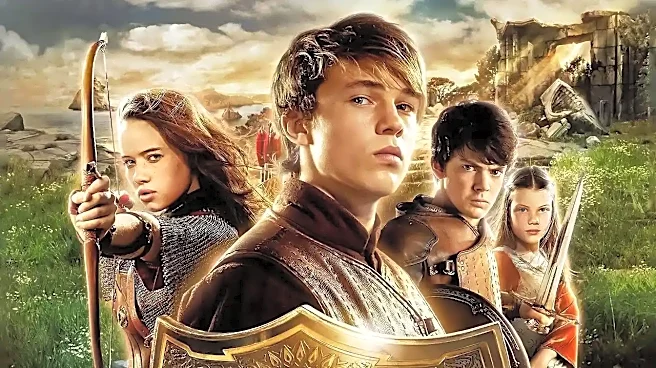
Previous adaptations of Narnia have already walked this tightrope, with mixed results. The Disney-produced films of the 2000s were successful but struggled to maintain momentum, in part because the episodic nature of the books and their overt religious themes made it difficult to build a conventional blockbuster franchise. Netflix is betting that Gerwig’s singular vision can succeed where others have stalled, creating a fantasy universe to rival the biggest names in streaming. Yet that vision is precisely what makes this project so fascinatingly fraught. Gerwig herself has admitted to feeling 'terror' about the undertaking, recognizing the deep reverence fans have for the source material. The task requires her to translate a world animated by divine will for an audience accustomed to her stories about the power of human will. It's an artistic challenge that is also a massive commercial gamble.