




From Underwear to Uniform
The T-shirt's story begins not in a design studio, but in the boiler rooms of the U.S. Navy. Around 1913, the Navy began issuing white cotton crewnecks as standard undershirts for sailors. They were practical, easy to wash, and a cool alternative under heavy
uniforms. For decades, that’s what it was: an undergarment. It was functional, meant to be unseen. After World War II, returning veterans brought the habit of wearing them home, often pairing the tee with their uniform trousers for casual wear. This slowly chipped away at the taboo of showing your underwear in public, but it was still just a piece of functional clothing, not a statement. It was the uniform of laborers and young boys, a humble item far from the world of fashion.
The Birth of a Rebel Icon
Everything changed in 1951. That year, Marlon Brando appeared on screen as Stanley Kowalski in "A Streetcar Named Desire," and the white T-shirt was never the same. His character was raw, magnetic, and dangerous, and the tight-fitting tee he wore—reportedly washed and tailored to be extra snug—became a second skin that amplified his rebellious masculinity. Suddenly, an undergarment was an object of desire. Just four years later, James Dean solidified its status as the uniform of the disaffected youth in "Rebel Without a Cause." Paired with a red jacket and blue jeans, his white tee was the height of effortless, anti-establishment cool. Brando and Dean transformed the T-shirt from a mere piece of clothing into a symbol of rebellion, youth, and a rugged, distinctly American sex appeal.
The Ultimate Blank Canvas
Once freed from its utilitarian and purely rebellious contexts, the white T-shirt became something even more powerful: a blank canvas. Its very plainness is its strength. In the 1970s, it became a vehicle for self-expression, emblazoned with band logos, political slogans, and brand names. But worn plain, it communicates a different kind of confidence. It’s democratic—worn by everyone from farmers to presidents, rock stars to tech billionaires. It rejects the fussiness of traditional menswear and embodies a kind of cool, understated authenticity. In a world of fleeting trends, the white T-shirt is a constant. It suggests that the wearer doesn't need loud patterns or logos to make a statement; their presence is enough. It is the sartorial equivalent of the American dream: a fresh start, open to endless possibility.
The Modern Uniform of Quiet Luxury
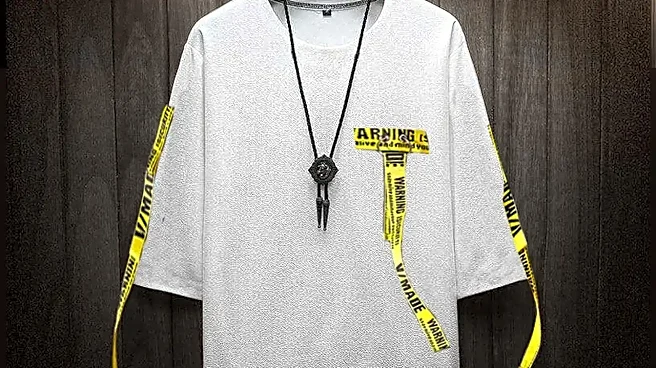
Today, the white T-shirt exists at every level of the style spectrum. It’s a staple of streetwear, often seen in oversized fits paired with chains and sneakers. Simultaneously, it has been embraced by high fashion, with designers like Karl Lagerfeld for Chanel pairing it with couture jackets on the runway. This has led to the modern phenomenon of the "perfect" white tee, with enthusiasts and brands obsessing over minute details of fabric, fit, and collar construction. Shows like "The Bear" have recently sent fans scrambling to find the exact, form-fitting T-shirt worn by its main character, proving the garment's enduring pop culture power. From a ninety-nine cent Hanes to a hundred-dollar designer version, the white tee's role has come full circle. It is both a basic necessity and an aspirational luxury, the quiet foundation upon which a well-dressed American builds a look.