





The End of Extravagance
Before the war, American fashion largely followed the lead of Parisian couture. But when Germany occupied Paris in 1940, the global fashion capital was cut off from the world. This created a void, but also an unprecedented opportunity for American designers
to step out from Europe's shadow. As the United States entered the war, the focus shifted dramatically from luxury to necessity. Fabric and other materials were desperately needed for the war effort, turning fashion into a landscape of patriotism and sacrifice. Extravagance was seen as unpatriotic, paving the way for a new, more streamlined and resourceful approach to getting dressed.
Making Do With Less: The L-85 Regulations
To conserve an estimated 15% of the nation's textiles for military use, the U.S. War Production Board issued General Limitation Order L-85 in 1942. These rules, which applied to clothing manufacturers, dictated the very silhouette of the era. The order banned features that used excess fabric, such as pleats, ruffles, patch pockets, and wide hems. Skirt lengths crept up to the knee, and circumferences were strictly limited. Men's suits lost their vests and second pairs of trousers, becoming the more economical "Victory Suit." While civilians weren't rationed on clothing as severely as in Britain, the L-85 rules effectively froze the fashion silhouette, making frugality the law of the land.
The Utilitarian Wartime Silhouette
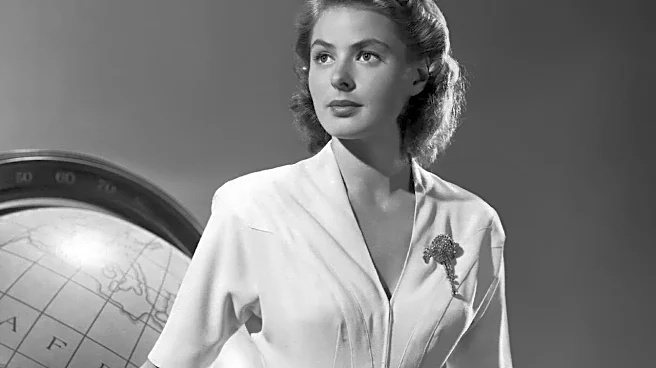
Out of these restrictions, a new, sharp-shouldered and narrow-hipped silhouette emerged. The look was defined by squared, padded shoulders, a nipped-in waist, and an A-line skirt that fell to just below the knee. This military-inspired aesthetic projected an image of strength and competence, perfectly suited for the millions of women entering the workforce. The practical shirtwaist dress became a daily uniform for many, while pants and overalls became acceptable womenswear, born from the necessity of factory work. Even accessories adapted; with leather and rubber reserved for the military, women turned to creative solutions, from painting seams on their bare legs to mimic stockings to wearing turbans to protect their hair.
American Designers Step Up
The combination of Parisian silence and domestic restrictions sparked a surge of American creativity. Designers like Claire McCardell thrived, championing a uniquely American approach to fashion known as "American Sportswear." McCardell embraced simplicity, practicality, and movement, using humble fabrics like denim, jersey, and cotton. She famously designed the "Popover" dress, a versatile wrap-around style that sold for just under $7 and became a national hit. Designers like McCardell and Norman Norell proved that style didn't require Parisian extravagance. They built a new fashion identity based on ready-to-wear, separates, and clothing designed for the lives American women were actually living.
The 'New Look' and a Lasting Legacy
When Christian Dior unveiled his "New Look" collection in Paris in 1947, it was a direct rebellion against wartime austerity. With its voluminous, fabric-heavy skirts and lavishly feminine hourglass shape, it was a sensation that signaled a return to luxury. Many women embraced this opulent new silhouette. However, the foundational changes of the war years were permanent. The concept of American sportswear, with its focus on separates and practical, easy-to-wear clothing, had been firmly established. The 1940s taught an entire generation that style could be inventive and resourceful. The decade had democratized fashion, proving that ingenuity could be just as chic as extravagance and embedding the principles of practicality and comfort into the very fabric of the American closet.