





The Test Run: A Lesson from 'Halloween Kills'
To understand the strategy for 'Halloween Ends', you first have to look at its predecessor, 'Halloween Kills'. Released a year earlier in October 2021, 'Kills' also got a hybrid day-and-date release. At the time, with the pandemic's impact still lingering,
the move was seen as a necessary compromise. It allowed Universal to cater to audiences still hesitant about returning to theaters while still capturing box office dollars from those who were. The result was a pleasant surprise for the studio. 'Halloween Kills' opened to a robust $49 million and grossed over $131 million worldwide on a modest $20 million budget, all while becoming a major streaming success for Peacock. This proved that, for a well-known horror franchise with a built-in fanbase, you could have your cake and eat it too. The theatrical experience drew the die-hards, while the streaming option captured everyone else.
The Peacock Problem
By 2022, every major media conglomerate was all-in on its proprietary streaming service, and the competition was brutal. NBCUniversal's Peacock, a relative newcomer compared to giants like Netflix and Disney+, was in a fierce battle for subscribers. In the streaming world, big, exclusive 'event' content is the number one driver for new sign-ups and, just as importantly, for keeping existing customers from canceling. The grand finale of a 45-year-old horror saga, promising the last-ever showdown between Laurie Strode and Michael Myers, was exactly the kind of high-profile event that could convince thousands of horror fans to subscribe to Peacock. The potential loss in ticket sales was weighed against the immediate and long-term value of a new subscriber, a calculation that increasingly tilted in favor of boosting the streaming platform. Universal reported that 'Halloween Ends' became the most-watched film or series ever on Peacock over a two-day period, suggesting their bet paid off handsomely in that regard.
It's All About the Options
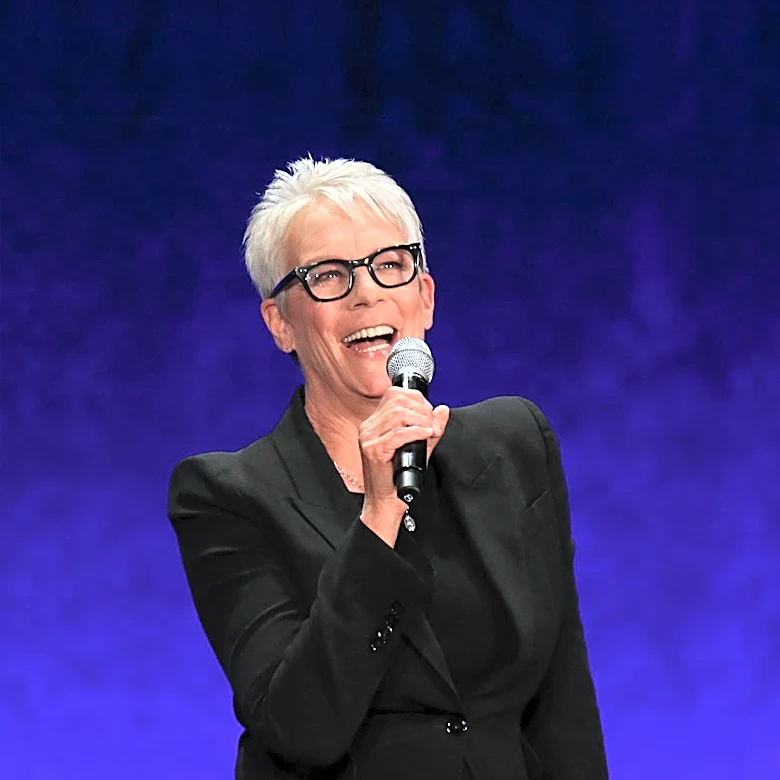
In announcing the decision, star Jamie Lee Curtis framed it as a move to accommodate all fans. She noted the 'great results' from the 'Halloween Kills' release and explained that the dual release for 'Ends' would allow audiences to watch it however they wanted. While a perfectly valid and fan-friendly sentiment, it was also smart business. The strategy acknowledged a permanent shift in audience behavior. Some viewers are now conditioned to expect premium content at home. Rather than fight that trend, Universal chose to monetize it directly through Peacock subscriptions. Producer Jason Blum, a major force behind the franchise, even admitted he was the one who pitched the hybrid model for 'Kills' after being disappointed by the purely theatrical (and financially underwhelming) release of his film 'Freaky' during a period of audience uncertainty. He didn't want a great movie to get lost again because its distribution model didn't match the moment.
The Financial Calculation
Ultimately, the decision was a calculated risk that hedged against multiple outcomes. While the film's opening weekend of $41.3 million was below some analysts' expectations, it was still the first film to open above $40 million in months and easily recouped its lean production budget of around $20-30 million. For Universal, the equation wasn't simply about maximizing the box office. It was about total revenue across different streams. The box office was one piece, Peacock subscriptions were another, and future video-on-demand rentals and sales were a third. By making 'Halloween Ends' a major streaming event, Universal solidified Peacock's value in the marketplace. While some in the industry debated whether the film left money on the table theatrically, Universal was playing a longer game where its streaming service's health was just as important as a single movie's opening weekend.