






The Spectacle vs. The Invisible
When you think of Emmy-worthy visual effects, your mind probably jumps to the spectacular. Dragons incinerating armies, alien starships descending on a futuristic city, or monsters emerging from a dimensional rift. This is what the industry often calls
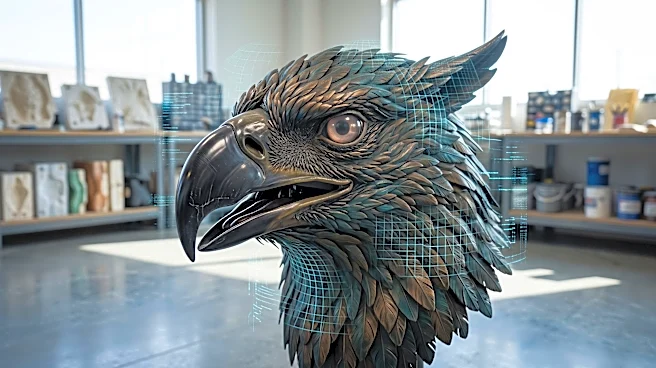
“showy” or “integrated” VFX. Think of the work on shows like "Foundation" or "Monarch: Legacy of Monsters," where the effects are a core part of the narrative and spectacle. They are loud, proud, and impossible to miss. But there’s a second, quieter kind of VFX: the seamless, or “supporting,” kind. This is the art of the invisible. It’s creating a flawless 1920s New York streetscape outside a window, de-aging an actor by a decade for a flashback, or digitally stitching together multiple locations to create one cohesive, believable environment. It’s the kind of work where the highest compliment is that no one, from the audience to the awards voter, ever suspected it was an effect at all.
The Curse of Perfection
Herein lies the central problem for VFX artists who specialize in realism. Their job is to erase any hint of their own existence. As legendary effects artist John Knoll once said, “Great effects should be invisible.” When a historical drama perfectly recreates a period setting, voters don't see a complex digital matte painting; they see a well-chosen location. When an actor looks subtly younger or older, they credit the makeup department, not the VFX team that painstakingly tweaked every frame. The goal of this work is to serve the story so perfectly that it goes unnoticed. But in an awards context, being unnoticed is the same as being absent. Voters can’t reward what they don’t know exists, creating a bizarre penalty for perfection. The artists’ success becomes their own worst enemy come awards season.
Decoding the Emmy Categories
The Television Academy does make an effort to address this disparity through its categories. There are two primary awards for VFX: “Outstanding Special Visual Effects in a Season or a Movie” and “Outstanding Special Visual Effects in a Supporting Role.” The first category is typically for the big, spectacle-driven shows where VFX is a main character—think "Alien: Earth" or "IT: Welcome To Derry." The “Supporting” category, in theory, is designed to honor the more subtle work. The official description from the similar Visual Effects Society award notes it’s for “invisible or near-invisible visual effects” that help create setting and environment but are not essential to the story. However, even with this distinction, the human eye is drawn to the bombastic. It’s far easier for voters to recall a breathtaking space battle than the flawless removal of modern-day antennas from a period drama’s skyline. The showy work often dominates the conversation, even in a category designed for subtlety.
This Year’s Unseen Contenders
Looking at the 2026 Emmy nominations, this dynamic is clear. A high-fantasy epic or a sprawling sci-fi series will almost certainly get a nod for its main VFX work. These are the projects where hundreds of artists contribute to world-building that is explicitly digital. But consider a prestige crime drama set in the 1970s or a limited series about a historical figure. The work there might be just as complex—digitally extending sets, creating crowds, or altering landscapes—but its purpose is to be utterly unmemorable. These shows rely on VFX to achieve a sense of authenticity that would be logistically impossible or prohibitively expensive to capture in-camera. While the flashier shows get the attention, the artists on these dramas are performing a different kind of magic trick: not showing you the impossible, but convincing you that you’re seeing the completely real.